

Atlantic Canada
See the maritime beauty of New Brunswick, Nova Scotia, and Prince Edward Island
Three provinces in 14 days: guided coastlines, ferry crossings, national parks, and food experiences shaped by the ocean tides.
Atlantic Canada
See the maritime beauty of New Brunswick, Nova Scotia, and Prince Edward Island
Three provinces in 14 days: guided coastlines, ferry crossings, national parks, and food experiences shaped by the ocean tides.
This 14-day journey traces a clear line through Atlantic Canada: from Halifax’s harbourfront streets to the Bay of Fundy’s tide-sculpted coast, across Prince Edward Island’s red-dirt farms and dune beaches, and into Cape Breton’s headlands and highland plateaus.
Along the way, you’ll encounter UNESCO heritage in Lunenburg and Grand-Pré, explore national parks and protected coastlines, and layer in food experiences that reflect the region’s working landscapes: winery visits in the Annapolis Valley, oysters and farming on PEI, and live-fire cooking at the Inn at Bay Fortune. With grounded comfort and steady pacing, the trip offers a practical, immersive way to understand Atlantic Canada through its tides, terrain, and the people who live by them.
Day 1: Arrive in Halifax
Tourism Nova Scotia / Photographer: Acorn Art & Photography
Tourism Nova Scotia / Photographer: Acorn Art & Photography
Your Atlantic Canada adventure begins in Halifax, where you settle into a hotel close to the harbour and spend the afternoon on the waterfront boardwalk, browsing local shops and galleries or visiting museums such as Pier 21 or the Maritime Museum of the Atlantic, easing into the maritime setting before the road trip begins.
Day 2: Lunenburg
Tourism Nova Scotia / Photographer: Acorn Art & Photography
Tourism Nova Scotia / Photographer: Acorn Art & Photography
Travel along Nova Scotia’s South Shore to Lunenburg, a UNESCO World Heritage Site known for its preserved British colonial town plan and colourful wooden architecture.
Explore the working waterfront, shipbuilding history, and compact downtown before returning to Halifax.
Day 3: Wolfville, Bay of Fundy, Grand-Pré, and Wine Country
Tourism Nova Scotia / Photographer: Adam Cornick
Tourism Nova Scotia / Photographer: Adam Cornick
Drive into the Annapolis Valley, where agricultural communities meet the world’s highest tides. Visit Grand-Pré National Historic Site, a UNESCO designation that interprets Acadian settlement and the engineered dykelands that shaped this landscape.
Tourism Nova Scotia / Drone Photography: AeroVision Canada Inc.
Tourism Nova Scotia / Drone Photography: AeroVision Canada Inc.
Continue to Fundy viewpoints to see the tidal range firsthand, then explore wineries producing Nova Scotia’s Tidal Bay wines. In Wolfville, settle into a small town defined by farm culture, good food, and the pull of the nearby coast.
Day 4: Digby & Ferry to Saint John
Tourism Nova Scotia / Photographer: Patrick Rojo
Tourism Nova Scotia / Photographer: Patrick Rojo
Travel to Digby — widely known as the scallop capital of the world — and take the opportunity to sample local scallops before boarding the ferry.
Tourism Nova Scotia / Photographer: Ian Selig
Tourism Nova Scotia / Photographer: Ian Selig
The Bay of Fundy crossing offers open-water views, seabirds, and shifting coastal light as you travel toward New Brunswick.
Arrive in Saint John and check into a central hotel with time to explore the uptown district, known for its historic brick streets, market culture, and strong local dining scene.
Tourism New Brunswick Lauren Mullaly
Tourism New Brunswick Lauren Mullaly
Day 5: St. Andrews and Ministers Island
New Brunswick Tourism Jon Billings
New Brunswick Tourism Jon Billings
Continue to St. Andrews-by-the-Sea for a whale-watching excursion on the Bay of Fundy, where humpbacks, minkes, and porpoises are commonly sighted in season.
New Brunswick Tourism Derek Grant
New Brunswick Tourism Derek Grant
When the tide recedes, cross the natural bar to Ministers Island to explore the Van Horne estate and shoreline paths.
The day ties together marine ecology, heritage, and the tide-dependent rhythms that define this coast.
Day 6: Fundy Trail Provincial Park to Moncton
Begin with a guided e-bike ride along the Fundy Trail Parkway in stunning Fundy Trail Provincial Park, a protected route of forested coast, river valleys, and wide ocean views.
New Brunswick Tourism Nick Hawkins
New Brunswick Tourism Nick Hawkins
Continue into Fundy National Park for lookouts and short walks, then visit Hopewell Rocks — towering formations shaped by centuries of extreme tides.
Arrive in Moncton in the evening, with the chance to see the tidal bore moving up the Petitcodiac River if timing aligns.
New Brunswick Tourism Nigel Fearon
New Brunswick Tourism Nigel Fearon
Day 7: Confederation Bridge to Prince Edward Island
Cross the 12.9-kilometre Confederation Bridge into Prince Edward Island and watch the landscape shift from mainland forest to rolling farmland, sheltered bays, and red sandstone shoreline.
Arrive in Charlottetown with time to explore its historic core and settle into the city’s relaxed pace before dinner.
Day 8: Guided Food and Farming Experiences on PEI
Tourism PEI/Sander Meurs
Tourism PEI/Sander Meurs
Choose a guided experience that matches your interests: a Charlottetown food tour focused on small producers, a private oyster farm visit to learn about aquaculture and sample island oysters, or time with a potato farmer to understand PEI’s red-dirt agriculture.
Each option offers a practical window into the island’s food systems and the communities that sustain them.
Day 9: PEI National Park and the FireWorks Feast
Credit: ©Tourism PEI / Paul Baglole
Credit: ©Tourism PEI / Paul Baglole
Spend the day in Prince Edward Island National Park, exploring dune systems and beaches shaped by wind and wave. Walk coastal boardwalks, swim, cycle, or simply spend quiet time along the shoreline. In the evening, gather at the Inn at Bay Fortune for the FireWorks Feast—a live-fire dining experience built around island-grown ingredients and a farm-centred approach to cooking.
Day 10: Ferry to Cape Breton and Glenora Inn
Take the ferry back to Nova Scotia and continue into Cape Breton.
Stop in Mabou for local music at the Red Shoe Pub, then travel on to the Glenora Inn & Distillery. Settle into the distillery grounds for the night, with the option to join a whisky tour exploring production methods at Canada’s first single-malt whisky producer.
Photo: Glenora Inn & Distillery
Photo: Glenora Inn & Distillery
Day 11: Cabot Trail to Ingonish
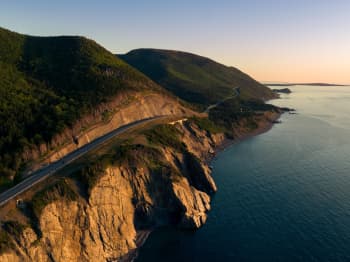
Drive the Cabot Trail, one of Canada’s most celebrated coastal routes. The road climbs and curves along steep headlands, passing Acadian forest, open ocean viewpoints, and small community stops.
Arrive in Ingonish with time to settle in, take a shoreline walk, or simply enjoy the shift into Cape Breton’s wilder coastal landscapes.
Day 12: Cape Breton Highlands National Park
Spend the day exploring Cape Breton Highlands National Park at your own pace. The terrain shifts between highland plateau, river canyons, and coastal cliffs, offering walking options that range from short shoreline paths to longer trails with panoramic views over the Gulf of St. Lawrence. Beaches, lookouts, and quiet pull-offs create natural pauses throughout the day.
Tourism Nova Scotia / Photographer: Dean Casavechia
Tourism Nova Scotia / Photographer: Dean Casavechia
Day 13: Return to Halifax
Travel back toward Halifax through rural communities, lake country, and forested stretches of Nova Scotia. It’s a gradual transition from Cape Breton’s highlands back to the harbour city.
Arrive with time for a final meal, a last waterfront walk, or any Halifax sights you saved for the end.
Tourism Nova Scotia / Photographer: Acorn Art and Photography
Tourism Nova Scotia / Photographer: Acorn Art and Photography
Day 14: Departure
Enjoy a simple morning before heading to the airport for your flight home. After two weeks of tides, coastlines, and island landscapes, the trip closes in the same spirit it began — steady, grounded, and shaped by the Atlantic.