

Birding on the Prairies
Finding birds, stillness and quiet magic in Saskatchewan
By Stephanie Mayo
I fill my pockets with black-oiled sunflower seeds at the Interpretive Centre inside the Beaver Creek Conservation area on the outskirts of Saskatoon and head out on the Discovery Trail with my group of fellow birders.
This short but scenic loop moves from low shrubs into a dense, shaded forest. Before even entering the woods, I spot a Clay-Coloured Sparrow attempting to hide, flittering from bush to bush, and a Grey Catbird perched in a nearby tree demanding attention with its unmistakable call.
Tree Swallows and flashes of Yellow Warblers dart around, but the trail is best known for its friendly Chickadees. With palms outstretched and seeds at the ready, we stand in the forest in hushed anticipation for them to land on our fingers, a real-life Disney moment here in the Canadian prairies.
Saskatchewan is a true birding stronghold, with more than 400 species recorded across the province. Its remarkable diversity is no accident, Saskatchewan sits at the crossroads of two major migratory flyways making it a vital stopover for birds.
The province is home to enigmatic species like the endangered Whooping Crane and the Sharp-Tailed Grouse – Saskatchewan’s official bird, as well as the endearing yet elusive Burrowing Owl.
Few cities are as perfectly positioned for birdwatching as Saskatoon, where major migration routes converge with river valleys and prairie landscapes. With the city as our base, our small group of eager birders heads out on day trips to see some of the province’s birding hotspots.
At the Beaver Creek Conservation Area, one of the top birding hotspots in the Meewasin Valley, we venture out on the River View Trail, which winds along the river, with views over sand dunes and along a stretch of untouched grassland that speaks to the quintessential beauty that is Saskatchewan.
I watch as a Northern Harrier Hawk soars effortlessly above the river and a Bobolink balances on a stalk of grass.
With its range of ecosystems, from sand dunes to aspen groves, Beaver Creek is the ideal spot to go birding that is not only close to Saskatoon, but has rewarding birding year-round. Species range from the Common Nighthawk to the occasional Whooping Crane. For those hoping to catch migratory visitors such as Sandhill Cranes and a wide variety of songbirds, May and September are especially rich times to visit.
The next day, we journey to Last Mountain Lake Bird Sanctuary, less than a two-hour drive southeast of Saskatoon. As the oldest bird sanctuary in North America — and Canada’s first protected area dedicated to the conservation of migratory birds, established in 1887 — it carries both ecological and historical significance.
Despite its importance, the sanctuary feels like a true hidden gem, set within vast, pristine grasslands and shared with no other visitors that day. Here, we learn that prairie grasslands are among the most endangered ecosystems in the world, and that more than 300 bird species have been recorded within the park.
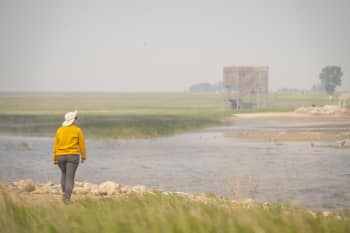
We set out across the grasslands on the Shore to Sky Trail, making our way toward the observation tower. From the top, we are treated to a bird’s-eye view of the shimmering waters below.
With binoculars and cameras in hand, I watch as waves of waterfowl fill my field of vision — American Coots, Northern Pintails, and Redheads among them.
Beyond the central area, we continue exploring by car, moving slowly through grasslands and wetlands, our progress marked by frequent stops as each new sighting demands attention.
Willets, Northern Shovelers, Wilson’s Phalaropes, Eastern Kingbirds, and a Northern Harrier reveal themselves along the way. For me, the standout moment isn’t just spotting the striking Western Meadowlark — it’s managing to capture a photograph of one, a small but deeply satisfying triumph.
Photo: Stephanie Mayo
Photo: Stephanie Mayo
At Pike Lake Provincial Park, we are met by Saskatchewan birding expert Stan Shadick.
Birding with an expert – particularly one of Stan’s calibre – is a memorable experience. His passion for birds began at the age of six, and he has been sharing that knowledge through private tours for more than 30 years.
We follow Stan along the Green Nature Trail, moving slowly through the forest. Stan has the honed skill to not only know where to look to spot birds, but to be able to identify a bird by song without hesitation.
Stan Shadick. Photo: Stephanie Mayo
Stan Shadick. Photo: Stephanie Mayo
We pause in anticipation as he listens intently and stops often, pointing out a species and guiding our eyes to where it might reveal itself.
Warbler songs fill the air, and we are rewarded with sightings of American Redstarts and Yellow Warblers among the trees.
“The park is one of the province’s best birding spots in the winter,” Stan tells us, noting that in the colder months, chickadees and even Down Woodpeckers are known to feed out of your hand.
As we tally the dozen or so species we spotted on this beautiful June day, Stan notes the many others that call the park home – owls, hummingbirds, and grouse, including the Sharp-tailed Grouse.
Just north of Saskatoon lies Redberry Lake, the province’s only UNESCO World Biosphere Reserve. This ecologically-rich landscape is defined by its diversity, from rolling grasslands and forested tracts to the saline waters of Redberry Lake itself.
Home to nearly 200 bird species, it’s an exceptional destination for birdwatching, with optimal timing being spring through summer.
Our guide, Mike Blom, the reserve’s bird specialist with more than two decades of experience, explains that summer is the ideal time to visit, when roughly “400 pairs of American White Pelicans nest on Pelican Island” in the middle of the lake.
Come fall, the reserve takes on a different kind of significance, as endangered Whooping Cranes use Redberry Lake as a vital stopover during their southbound migration.
Our hike begins with a steep descent through dense forest, accompanied by the songs of warblers overhead.
As we reach the high point of the trail, I pause in quiet awe. From this vantage, the reserve opens up before me — undulating grasslands, pockets of forest, and islands scattered across the lake. With the wind whistling around us and birds bobbing on the water below, I feel deeply grateful to experience such a wild and protected place so close to Saskatoon.
Over the course of several days, I’ve learned that just beyond Saskatoon’s city limits lies a birder’s paradise, where wetlands, grasslands, and forest edges pulse with birdsong.
Whether you’re a seasoned birder or simply seeking a deeper connection with nature, using Saskatoon as your base opens the door to some of Saskatchewan’s most rewarding wild places — and the quiet magic of birding on the prairies.
Other birding hotspots in Saskatchewan:
- Grasslands National Park: In southern Saskatchewan, this park is one of the best places to see the endangered Burrowing Owls in the summer months.
- Cypress Hills Interprovincial Park: Straddling the border of between Saskatchewan and Alberta, Stan Shadick calls it “one of the best birding hotspots in southwestern Saskatchewan” thanks to its diversity of species.
- Prince Albert National Park: This northern park features boreal forest and is an ideal spot for seeing owls in late winter, like the Great Gray Owl.
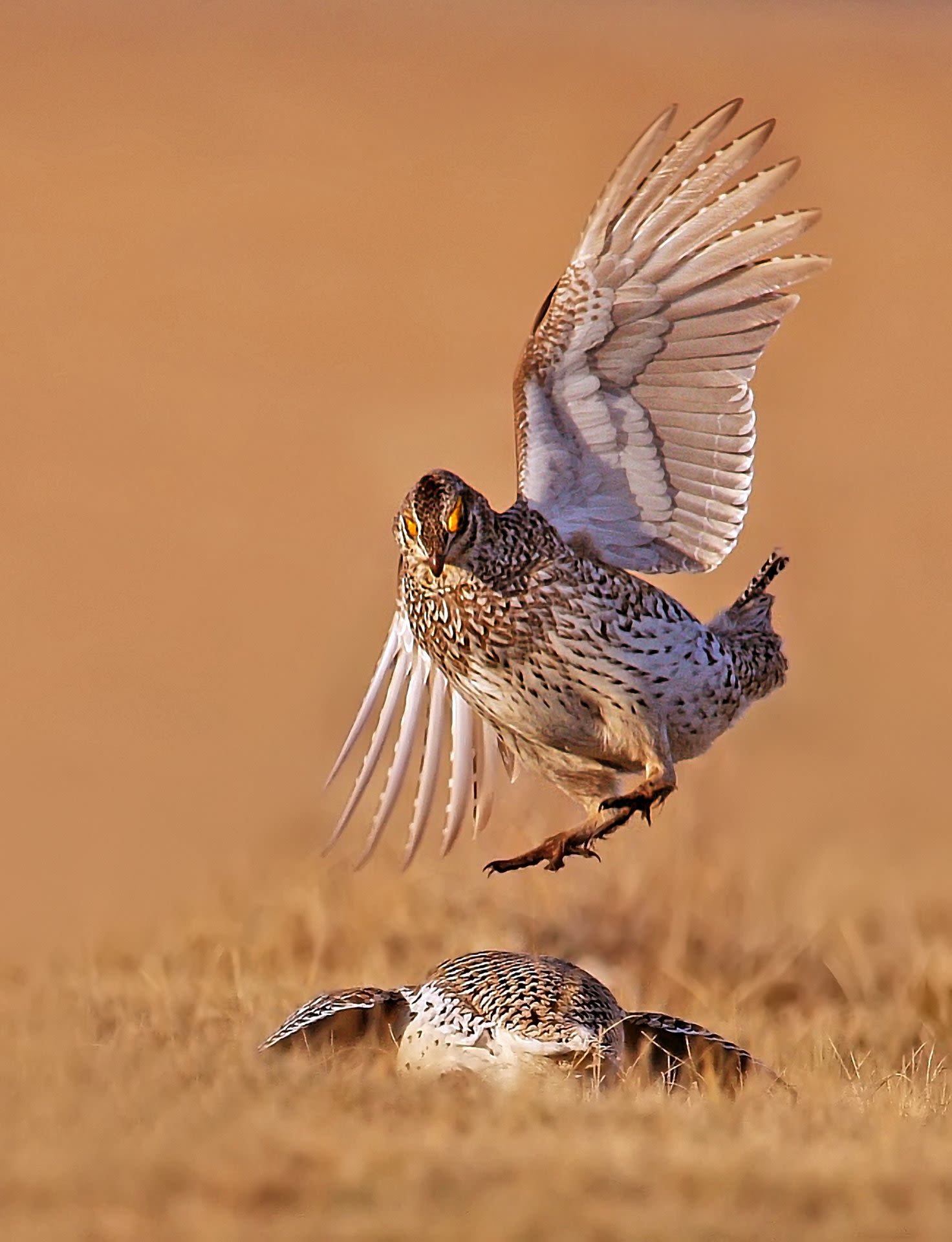

Sharp-tailed Grouse. Photo: Nick Saunders
Sharp-tailed Grouse. Photo: Nick Saunders
Stephanie Mayo
Stephanie Mayo is a travel writer and the blogger behind The World As I See It – travel blog. With a passion for small towns, hiking trails, coffee shops and uncovering hidden gems, she helps inspire others to explore Canada! Focusing on her backyard of Ontario, her goal is to help aid travellers in going beyond the popular places, support local businesses and create memorable road trips.