

Following the Fraser
From mountain valleys to fertile farmland, follow the Fraser River through British Columbia's lower Fraser Valley and discover the communities shaped by its waters.
I smell the bison before I see them.
I'd left the floor-to-ceiling doors to the deck of my room at Fraser River Lodge cracked open overnight, letting the cool mountain air drift in from the valley.
Now, in the blue hour before sunrise, with low clouds draped across the mountains, the air carries a deep, earthy scent.
I'm staying in one of the lodge's Bison Suites, named for the herd that grazes in the meadow beyond. When I step onto the deck, I have trouble spotting them in the pre-dawn light, their dark silhouettes blending into the shadow of the mountains behind them.
The small herd grazes quietly beside the Fraser River on the 18-acre grounds of Fraser River Lodge, owned by Cheam First Nation.
In a few hours, I'll be on that same river searching for another ancient giant: white sturgeon, North America's largest freshwater fish.
For now, though, I'm content to sit on the deck and watch the valley wake. The sky grows lighter without ever quite brightening beneath the blanket of cloud. Every so often, Mount Cheam's snow-covered summit emerges before disappearing again into the mist. The bison continue their slow morning wander as I sip my coffee.
This is my third morning in British Columbia's Fraser Valley, a region stretching east from Metro Vancouver where fertile floodplains, towering mountains, vibrant communities and Indigenous cultures converge.
It is a place that continually challenges my expectations, revealing itself one layer at a time.
The Fraser Valley takes its name from the river that winds through it, broadening here into a fertile floodplain after descending from the mountains and canyons farther upstream.
Stretching 1,375 kilometres from the Rocky Mountains to the Strait of Georgia, the Fraser River has shaped British Columbia's ecosystems, communities and cultures for thousands of years. Long before European settlement, it was a vital travel corridor and food source for Indigenous Peoples, including the Stó:lō, whose name simply means "People of the River."
The Fraser remains one of the world's great salmon rivers and is home to the largest population of white sturgeon on Earth. These remarkable fish have existed since the age of the dinosaurs, can live for more than a century and grow to over 12 feet in length.
Hooking a very large one during our guided excursion on the river is both exhilarating and humbling. Just as we prepare to bring it alongside the boat for a photograph, it slips free and disappears beneath the surface. I can't help but wonder how many other anglers it has eluded over the decades — and how many more it will. Watching it vanish into the Fraser, I'm reminded that I'm only a brief visitor in this ancient landscape.
My introduction to the Fraser Valley had begun a few days earlier in Abbotsford. Following the Fraser River east from Vancouver, the city gradually gave way to open fields, with Mount Baker's snow-covered summit rising above them.
Some of the Fraser Valley's most productive farmland lies within Sumas Prairie, on the outskirts of Abbotsford. I'm surprised to learn it was once home to one of British Columbia's largest freshwater lakes.
Between 1920 and 1924, Sumas Lake was drained, transforming roughly 10,000 acres into fertile farmland. It was a controversial undertaking, opposed by Indigenous Nations whose communities and livelihoods were deeply connected to the lake, and one whose consequences continue to shape the region more than a century later.
One of those farms is Lakeland Flowers, home to the Abbotsford Tulip Festival. Standing among rows of tulips stretching toward the mountains, it's difficult to imagine this colourful landscape was once underwater.
Photo: Izabela Jaroszynski
Photo: Izabela Jaroszynski
That illusion doesn't last long.
"See that dyke over there?" asks owner Nick Warmerdam, pointing toward the highway. "That's where it broke."
He's referring to the catastrophic flooding of 2021, when water surged back across the former lakebed, damaging farms, homes and infrastructure throughout the region.
It's a reminder that although Sumas Lake is gone, the relationship between this land and water continues to shape life in the Fraser Valley.
By the time I reach Chilliwack, it's easy to see how the Fraser Valley's farms also shape its culinary scene.
At Amato Trattoria in historic downtown Chilliwack, braised short ribs arrive with broccolini, carrots and a vibrant Sicilian salsa verde. Around the table, the meal showcases the abundance of the surrounding valley. After learning how the region's fertile soils came to be, it suddenly feels impossible to separate what's on the table from the landscape beyond the restaurant's doors.
It's a pattern I notice throughout the Fraser Valley. Whether in Abbotsford, Chilliwack, Harrison Hot Springs or Fort Langley, menus follow the seasons, ingredients come from nearby farms, and every meal feels rooted in place.
As we drive back toward Vancouver, I find myself thinking about my morning at Fraser River Lodge. Standing quietly on the deck, coffee in hand, watching the bison and waiting for the mist to lift and reveal glimpses of Mount Cheam.
The Fraser Valley never fully revealed itself, either. Each stop brought another piece into focus: the fertile fields that were once the bottom of Sumas Lake, meals shaped by the surrounding farms, ancient sturgeon beneath the Fraser River, and stories that have been carried through this landscape for thousands of years.
Like the mountains that morning, the valley came into focus slowly. And I have a feeling there's still much more waiting beyond the mist.
Note: I was hosted on this trip through Destination British Columbia, Tourism Abbotsford, Tourism Chilliwack, Tourism Langley and Tourism Harrison. All opinions remain my own.
Want to create your own Fraser Valley Road Trip?
↓
Fraser Valley: Worthy Stops
If you're creating your own Fraser Valley road trip itinerary, these are the places worth building into your route. From family-run farms and boutique hotels to memorable meals and conversations with the people who call the region home, each stop offers another way to experience the Fraser Valley.
Abbotsford
Photo: Izabela Jaroszynski
Photo: Izabela Jaroszynski
The first thing I noticed was the Atlantic blue cedar framing the entrance to this Tudor-style boutique hotel. Inside, every room is inspired by a different film, from The Secret Garden to Under the Tuscan Sun. I stayed in the A Good Year suite, complete with a separate bedroom and living room, plus a balcony overlooking the vines of the Pepin Brook Vineyard Estates next door. A DVD player comes stocked with the movie your suite is named for, a small touch that made me smile.
Breakfast is served in the dining room, where the windows frame Mount Baker on a clear morning. If you're interested in birding, make time to chat with owner Chris. His enthusiasm for the birds that frequent the property quickly turned a simple question into an engaging conversation. (One practical note: there is no elevator, so be prepared to carry your luggage if you're staying upstairs.)
Photo: Izabela Jaroszynski
Photo: Izabela Jaroszynski
Restaurant 62 was my first introduction to the Fraser Valley's farm-to-table food scene. Executive Chef and co-owner Jeff Massey builds his menus around seasonal ingredients sourced from the surrounding region. I ordered the sea scallops alongside a rhubarb mojito, both of which celebrated the flavours of spring without feeling overcomplicated.
The Fairway Room at Ledgeview Golf Course
I wasn't expecting one of my favourite breakfasts to come from a golf course, but The Fairway proved me wrong. The Smoked Salmon Rösti, topped with B.C. smoked salmon, poached eggs, dill crème fraîche and fried capers, was worth the stop on its own. If you have room, don't leave without ordering the Mimosa Beignets.
Photo: Izabela Jaroszynski
Photo: Izabela Jaroszynski
I visited during the Abbotsford Tulip Festival, when millions of tulips transformed the Sumas Prairie into a patchwork of colour. It's easy to understand why people come for the photographs, but spending time wandering the fields gave me a new appreciation for the work behind the blooms. Owners Nick Warmerdam and his partner Elena Middlemass have created one of the Fraser Valley's signature spring experiences, with more than 100 varieties of tulips blooming across the farm.
After the tulip season finishes, the farm showcases lupins, peonies, and lavender.
Photo: Izabela Jaroszynski
Photo: Izabela Jaroszynski
The Fraser Valley may not have the same reputation as the Okanagan, but places like Cannon Estate Winery make a strong case for spending a little more time exploring the region's wine country. We stopped in for brunch, and I shared a mimosa flight alongside French toast. Like many of the wineries in the valley, Cannon is family-owned (Andi and Justin) and deeply rooted in the region's agricultural traditions.
Taves Family Farms and Estate Cidery
Photo: Izabela Jaroszynski
Photo: Izabela Jaroszynski
If cuddling baby goats and sampling cider is your idea of a good time, Taves Farms is a must-stop. You can spend the afternoon feeding goats, wandering through the expansive flower garden (it was tulips when I visited in April, but I'm told their pumpkin display is also magical to behold in the fall), sampling their house-made cider and enjoying a tasting menu in one of their barnyard booths.
Chilliwack
Photo: Izabela Jaroszynski
Photo: Izabela Jaroszynski
This was my favourite meal of the trip. As a group, we sampled the arancini, the Calabrian dip made with cannellini beans, the beet and ricotta salad, and the beef carpaccio, all of which were perfect. For dinner, I shared a plate of braised short ribs with a friend, as the portions are generous, and the meal was a knockout. Save a wee bit of room for dessert, which included some of the tiramisu I've ever had.
Photo: Izabela Jaroszynski
Photo: Izabela Jaroszynski
There's a sign that hangs on the wall at South Sumas Bistro that reads "People who love to eat are always the best people." If you're one of those people, you'll love this bright little eatery.
Friendly service and generous portions make it an easy place to begin the day.
Photo: Izabela Jaroszynski
Photo: Izabela Jaroszynski
In the early 1900s, Chilliwack was home to a thriving hops industry. While much of that disappeared after the Second World War, places like Farmhouse Brewing are helping revive that agricultural tradition by growing their own hops and barley on the property.
Owners Colleen and Dan started the brewery, Colleen told me, out of necessity. They wanted to create a business that gave them the kind of home life they envisioned for their three boys. That philosophy seems to shape everything about Farmhouse. From the welcoming atmosphere to the family-friendly setting, it feels less like a brewery and more like a gathering place rooted in the land that surrounds it.
Photo: Izabela Jaroszynski
Photo: Izabela Jaroszynski
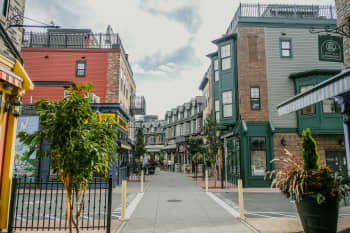
Chilliwack's historic downtown has been thoughtfully revitalized into a pedestrian-friendly neighbourhood filled with cafés, restaurants, boutiques and public gathering spaces. It's worth slowing down, wandering a few side streets and seeing how the city's history has been woven into its future. We didn't have time to visit any of the little shops, but some looked quite interesting, including The Love Chapter (a bookstore dedicated to romance novels), and Witchy Boo (for all things mystical and enchanted).
Chilliwack Mural Tour with Chilliwack Tours
Photo: Izabela Jaroszynski
Photo: Izabela Jaroszynski
If you happen to be visiting Chilliwack during their annual Mural Festival, you'll get a front-row seat to artists transforming streetscapes into art. Outside of the festival, you can wander around the area to see the dozens of beautiful works of art.
We had an engaging mural tour with local guide Michael Berger of Chilliwack Tours and it added much appreciated context to what we were seeing. Highly recommend.
Agassiz & Harrison Hot Springs
Photo: Izabela Jaroszynski
Photo: Izabela Jaroszynski
Perched above the Fraser River, Fraser River Lodge is an Indigenous-owned retreat that feels deeply connected to the landscape around it. My suite had a luxurious king bed, a stone fireplace, a rainfall shower, and a private hot tub on the deck overlooking the bison and the mountains. Both dinner and breakfast at the lodge were exceptional, but it was the quiet moments on the deck with a coffee in hand that stayed with me longest.
The lodge is known for its guided white sturgeon fishing adventures, but it's also a wonderful base for wildlife viewing, birdwatching and simply slowing down. Whether you're hoping to spot bald eagles overhead, photograph the bison or spend an evening watching the light change across the valley, it's the kind of place that invites you to linger.
Great River Fishing Adventures
Photo: Izabela Jaroszynski
Photo: Izabela Jaroszynski
Catch-and-release fishing for white sturgeon on the Fraser River is unlike any angling experience I've had before. You can book this activity directly through the Fraser River Lodge. These prehistoric fish can live for more than a century, and catching one before carefully releasing it back into the river gives you a profound respect for the ecosystem that supports them.
Our guide, Mitch, patiently coached us through the techniques of reeling in such a powerful fish and somehow managed to keep our spirits up when our "big one" slipped off the line just before we had the chance to wade into the river for a photo. We did get a good look at it and Mitch estimated it was 9 feet long and weighed around 400 pounds. Like most fishing stories, though, I'm sure it will only get bigger with every retelling.
Harrison Visitor Centre & Sasquatch Museum
Photo: Izabela Jaroszynski
Photo: Izabela Jaroszynski
I expected a quirky roadside attraction. Instead, I found one of the more educational parts of the trip. While it explores the history of Sasquatch sightings and the folklore that has made the Harrison River Valley famous, it also does an excellent job of presenting the Indigenous roots of the legend. The word Sasquatch is believed to come from the Sts'ailes word Sasq'ets, and for the Sts'ailes people, Sasq'ets is regarded as a spiritual being with an important place in their oral traditions.
The recently expanded museum also includes interactive exhibits, historical artifacts, witness accounts and a Sts'ailes Longhouse exhibit, making it much more than a stop for Bigfoot enthusiasts.
I left with far more questions than answers (in the best possible way) and I'm already planning a return trip to learn more about the history, culture and stories surrounding Sasq'ets.
Photo: Izabela Jaroszynski
Photo: Izabela Jaroszynski
Spring in the Fraser Valley is really all about the tulips. And if your visit coincides with spring, make time for the Harrison Tulip Festival. Set against the dramatic backdrop of the Harrison River Valley, the festival features more than 14 million tulips, hyacinths and daffodils in over 150 varieties set across its 45-acre site. Wandering the colourful fields is reason enough to visit, but thoughtfully designed gardens, food trucks and picnic areas encourage you to slow down and spend a few hours soaking it all in.
Village of Harrison Hot Springs
Surrounded by forested mountains and the waters of Harrison Lake, Harrison Hot Springs has a moody, almost cinematic quality, especially when the clouds hang low over the peaks. I enjoyed wandering the waterfront, popping into a few local shops and simply watching the lake. It feels like the kind of place where it's perfectly acceptable to do very little, and that's part of its charm.
Langley
Fort Langley
Photo: Izabela Jaroszynski
Photo: Izabela Jaroszynski
After several days spent exploring farms, rivers and wide-open landscapes, Fort Langley offers a different pace. The walkable village is filled with cafés, bookstores, galleries and independent shops, making it an easy place to spend a relaxed afternoon.
Photo: Izabela Jaroszynski
Photo: Izabela Jaroszynski
One of the things I enjoyed most about Sabà Bistro was meeting owner Simone Hurwitz, whose warmth set the tone for the entire evening. (Her daughter told me that Sabà is the Hebrew word for "plenty," a fitting name for a restaurant built around generous hospitality and abundant food.)
The Mediterranean-inspired menu is full of dishes worth sharing. For me, the standouts were the pistachio honey yams and the perfectly seared halibut. If one meal captures the feeling of lingering over good food and good conversation, this is it. Simone and her three daughters have also created a small family of businesses in Fort Langley, operating a café and a newly opened pizzeria alongside the bistro.
Photo: Izabela Jaroszynski
Photo: Izabela Jaroszynski
If you're spending the morning in Fort Langley, there are plenty of places to grab breakfast and a coffee, which is part of what I love about this village. We chose Blacksmith Bakery, built on the site of Reid's Blacksmith Shop, which dates back to around 1910. Today, the artisan bakery has become something of a community gathering place, with locals and visitors alike stopping in for coffee, pastries and brunch.
Freshly baked pastries, excellent coffee and a bright, welcoming atmosphere made it difficult to leave. I had the quiche with a side salad, and both were excellent. If you have a sweet tooth, spend a few extra minutes admiring the pastry case before making your decision — choosing just one treat is the hardest part.
Fort Langley National Historic Site
Photo: Izabela Jaroszynski
Photo: Izabela Jaroszynski
Walking through Fort Langley National Historic Site gave me a much better understanding of why this small riverside community has played such an important role in British Columbia's history. Established by the Hudson's Bay Company in 1827, the fort was originally built as a trading post and later became the place where Governor James Douglas proclaimed the Colony of British Columbia in 1858 during the Fraser River Gold Rush.
Photo: Izabela Jaroszynski
Photo: Izabela Jaroszynski
One of the most memorable experiences of my time in Fort Langley was an Indigenous tea blending workshop at Tradish: The Ancestor Café, offered through Chew On This Tasty Tours. Led by Chef Sarah Meconse Mierau, the experience combined tea blending, storytelling and a shared meal, offering a thoughtful introduction to Indigenous foodways and the cultural significance of native plants.
It's an experience that deserves far more than a few paragraphs, and one I'll be returning to in a future story. For now, I'll simply say that it was one of the most meaningful experiences of my Fraser Valley road trip.
It felt like an appropriate place to end the journey. After several days learning about the Fraser Valley through its farms, rivers, food and people, I left Fort Langley with a deeper appreciation for the stories that have shaped this region for thousands of years, and the people who continue to tell them.