
Cabot Trail in Autumn: How to Experience Nova Scotia’s Most Scenic Drive


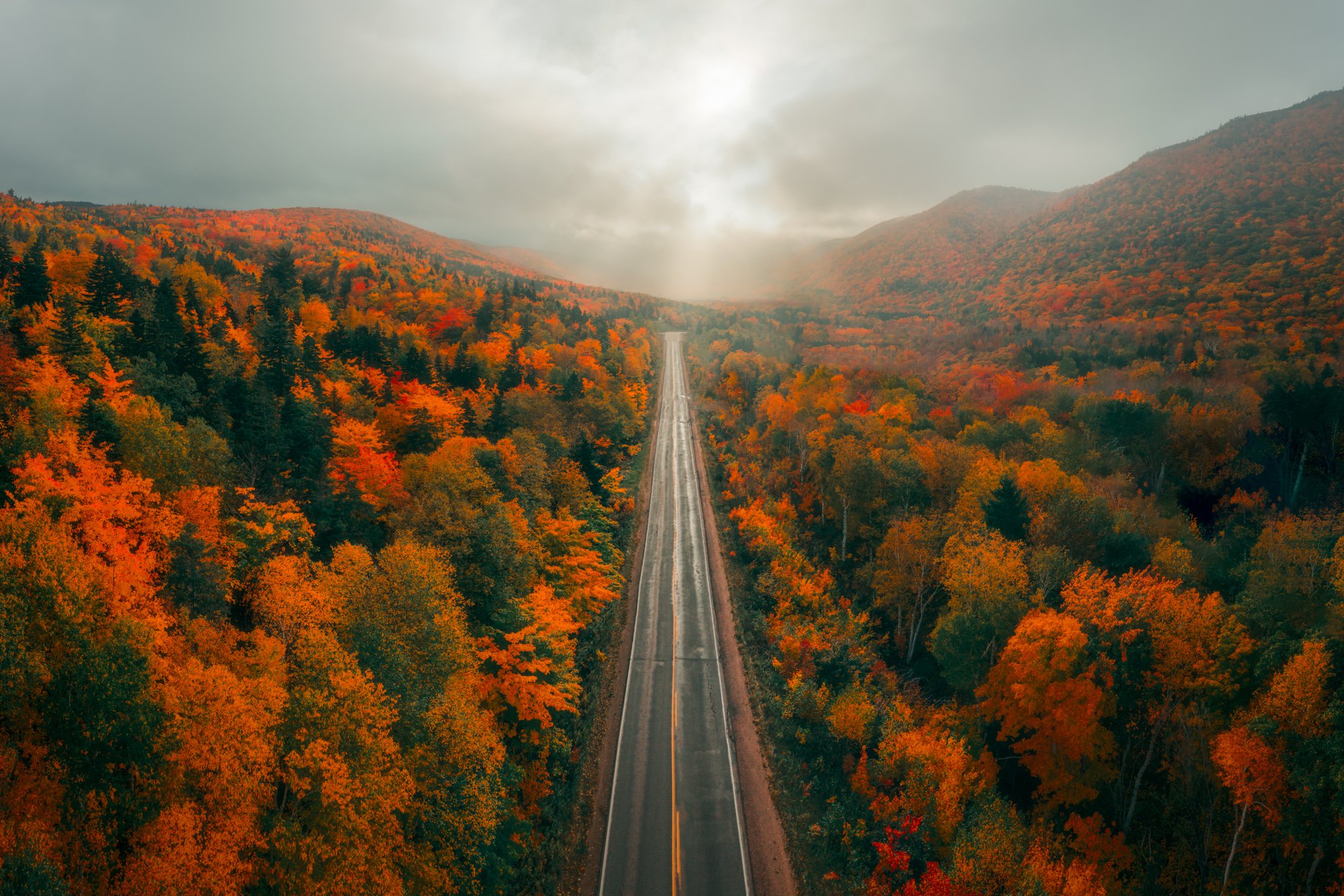
There’s something deeply memorable about travelling the Cabot Trail in autumn. Forested mountains turn red, orange, and gold above the coast, cooler days invite you out onto the trails, and Cape Breton’s music and food traditions seem to become even more closely woven into the journey.
At nearly 300 kilometres, the Cabot Trail loops around northern Cape Breton Island, passing through coastal communities and Cape Breton Highlands National Park along the way. It’s a spectacular drive at any time of year, but fall brings a brief and particularly colourful window to experience it.
What Makes Fall So Memorable on Cape Breton Island

Autumn settles gently over the Cabot Trail. Maples, birches, and aspens shift to warm yellows and reds, their colours standing out against the dark evergreens and the deep blue of the water. The sun sits lower in the sky, giving the highlands and bays a softer light. With the busiest weeks of summer behind you, the road takes on a quieter rhythm. Cool air carries the scent of spruce and occasional wood smoke from village chimneys, while the steady sound of the sea is never far away. Morning fog drifts through the valleys, sometimes breaking to reveal a clear stretch of blue, and evening light spreads calmly across the water.
The landscape makes the change of season especially dramatic. The Cabot Trail climbs from the coast into the Cape Breton Highlands, where forests stretch across hillsides and down towards the Gulf of St. Lawrence and Atlantic Ocean. Around each bend, the view shifts: a sweep of colourful forest, a fishing village tucked beside the water, or a rocky headland reaching into the sea. Cape Breton Highlands National Park protects a large portion of this landscape, with trails and lookoffs that give you a chance to leave the road and experience the season on foot.
A Season of Harvest and Festivals
Fall is harvest season across Nova Scotia, bringing apples, squash, pumpkins, and other local produce to markets and menus. It’s also a good time to settle into the kind of meals that make sense after a cool day outside: seafood chowder, freshly baked bread, and dishes built around what’s available locally.
Along the Cabot Trail, meals become part of the journey. Stop in communities for lunch, look for local seafood, or linger somewhere warm after a morning on the trails. Keep in mind that some restaurants, accommodations, and tourism businesses operate seasonally or reduce their hours later in the fall.
Cape Breton’s autumn colour also coincides with one of the island’s biggest cultural celebrations. Held for nine days each October, the Celtic Colours International Festival brings concerts and cultural events to communities across Cape Breton. In 2026, the festival runs from October 9 to 17, with 52 concerts planned in 36 communities.
After a day on the road, you might find yourself in a community hall listening to fiddle music, at a concert in a church or theatre, or watching an evening of song and step dancing. The festival is rooted in Cape Breton’s living musical traditions, bringing visitors into the communities where those traditions continue to thrive.
If you plan to travel during Celtic Colours, book ahead. October may fall outside Canada’s traditional summer travel season, but peak foliage and festival dates can still be busy, particularly around popular accommodations and attractions.
Other seasonal events take place around the province throughout the fall. Tourism Nova Scotia’s fall guide is a useful place to check what may be happening during your travel dates.
Make Time for the Communities Along the Way

It can be tempting to think of the Cabot Trail primarily as a scenic drive, but the communities around it are as important to the experience as the road itself.
Chéticamp, on the island’s western coast, is an Acadian community and a natural base for exploring the western side of Cape Breton Highlands National Park. Around the other side of the route, Ingonish sits between highlands, beaches, and the Atlantic. Baddeck, on the shores of the Bras d’Or Lake, is often used as a starting or finishing point for a Cabot Trail journey.
These are places to stop rather than simply pass through. Have lunch, look for locally made work, listen for live music, and leave enough flexibility in your itinerary to stay longer than expected.
Cape Breton is shaped by Mi’kmaw, Acadian, and Gaelic cultures, each with distinct histories and living traditions. If you have more time on the island, Tourism Nova Scotia’s guide to exploring the Cabot Trail and beyond is a useful starting point for cultural experiences beyond the scenic drive itself.
How Long Should You Spend on the Cabot Trail?
You can technically drive the Cabot Trail much faster than you should.
For a road trip that includes hikes, communities, meals, and unplanned stops, several days gives the route room to breathe. We’d suggest a four- to five-day Cabot Trail itinerary and notes that the route works particularly well from early summer through fall, when more seasonal tourism businesses and outdoor experiences are operating.
If you have less time, concentrate on one section rather than trying to circle the entire route. A couple of nights near Chéticamp or Ingonish can give you time to explore the national park without spending most of your trip behind the wheel.
And while fall can be quieter than summer overall, don’t assume you’ll have Cape Breton to yourself. Peak foliage weekends and Celtic Colours bring their own influx of visitors.
A Few Things to Know Before You Go
Fall weather in the Cape Breton Highlands can change quickly, so pack for rain, wind, and cool temperatures even when the forecast looks promising. Daylight also becomes noticeably shorter as the season progresses, making it worth planning longer hikes and scenic drives earlier in the day.
Check seasonal opening hours before setting out, particularly later in October. Cape Breton Highlands National Park is open year-round, but visitor services are seasonal, with visitor centres operating through most of October.
Most importantly, leave space in the itinerary. The appeal of the Cabot Trail isn’t just reaching a particular lookout. It’s rounding a corner and deciding to stop, walking farther than you intended because the trail is good, or staying for another song before heading back out on the road.
If you’d like a closer look at some of the route’s most breathtaking viewpoints, our Top 10 Scenic Stops along the Cabot Trail guide can help you plan your must-see moments.
Inspired Ways to Plan Your Journey in Nova Scotia

If you’re dreaming of an autumn road trip that folds the Cabot Trail into a wider Maritime adventure, these Landsby itineraries offer ready-made inspiration:
- Halifax to the Highlands: A self-drive journey connecting Halifax with Cape Breton, bringing together nature, culture, and flavour along the way.
- Sea to Stars: Nova Scotia In-Depth: From dark-sky stargazing to coastal cuisine, this journey captures the province’s quiet magic.
- Atlantic Canada Highlands & Islands: A broader Atlantic Canada journey that includes Cape Breton and the Cabot Trail as part of an exploration of the region’s highlands, islands, and coastal communities.