
Atlantic Canada Road Trips You Won’t Want to Miss This Summer


There's a moment on road trips through Atlantic Canada’s coast when the map stops mattering. Maybe it happens on a red clay road in Prince Edward Island, or at the edge of a Newfoundland headland where the Atlantic stretches into the horizon. Maybe it's standing below towering cliffs in the Bay of Fundy, watching a sea floor that was underwater an hour ago slowly reappear.
Atlantic Canada (New Brunswick, Newfoundland & Labrador, Nova Scotia, and Prince Edward Island) is a road trip region built for people who want to cover real ground. The distances are manageable. The scenery is beyond your greatest expectations. Here, the people are warm, welcoming, and hospitable in a way that feels like you’ve met before.
Here's a region-by-region guide to the routes and experiences worth building a summer around.
New Brunswick Road Trips: Where the Sea Rewrites the Shore

Twice a day, up to 160 billion tonnes of seawater surges in and out of the Bay of Fundy, recording the highest tides on the planet at up to 16 metres per cycle. Standing at the shoreline when the water retreats, the scale of it takes a moment to absorb.
The Fundy coastline runs between Moncton and Saint John, with St. Andrews by-the-Sea at the far southwestern edge. A road trip connects these stops passes through Hopewell Rocks, where flower-pot rock formations rise from the ocean floor and are walkable at low tide, along with the cliffs at Cape Enrage and the sea caves of St. Martins.
Fundy National Park has hiking trails through old-growth forest to lookouts above the bay. The Fundy Trail Provincial Park, with 41 kilometres of coastal wilderness, is quieter and accessible by foot and mountain bike.
Between June and October, whale watching tours operate in Fundy waters, where minke, finback, and humpback whales feed on the nutrients stirred up by the tides. The Bay of Fundy is one of the most productive whale habitats in the North Atlantic.
Our Coastal New Brunswick: Exploring the Bay of Fundy itinerary covers this stretch over seven days, based in Moncton, Saint John, and Saint Andrews. Optional add-ons include sea cave kayaking, an Indigenous Storytelling Walk, and a guided visit to Ministers Island, a tidal island accessible only at low tide.
For those who want to extend into Nova Scotia, the Wonders of the Bay of Fundy itinerary crosses the bay by ferry from Saint John to Digby, looping back to Halifax through the Annapolis Valley. It adds the Joggins Fossil Cliffs, a UNESCO World Heritage Site, and national historic sites at Fort Anne, Port Royal, and Grand-Pré.
Newfoundland & Labrador Road Trips: Icebergs, Vikings, and the Edge of the Continent

Getting to Newfoundland takes commitment. The ferry crossing from Nova Scotia runs between six and fourteen hours depending on the route. When you arrive, the scale of the island needs time to settle. This is the oldest confirmed European settlement site in North America. It's where icebergs drift past fishing villages every spring, where puffins nest in numbered colonies, and where Vikings arrived and departed over a thousand years ago.
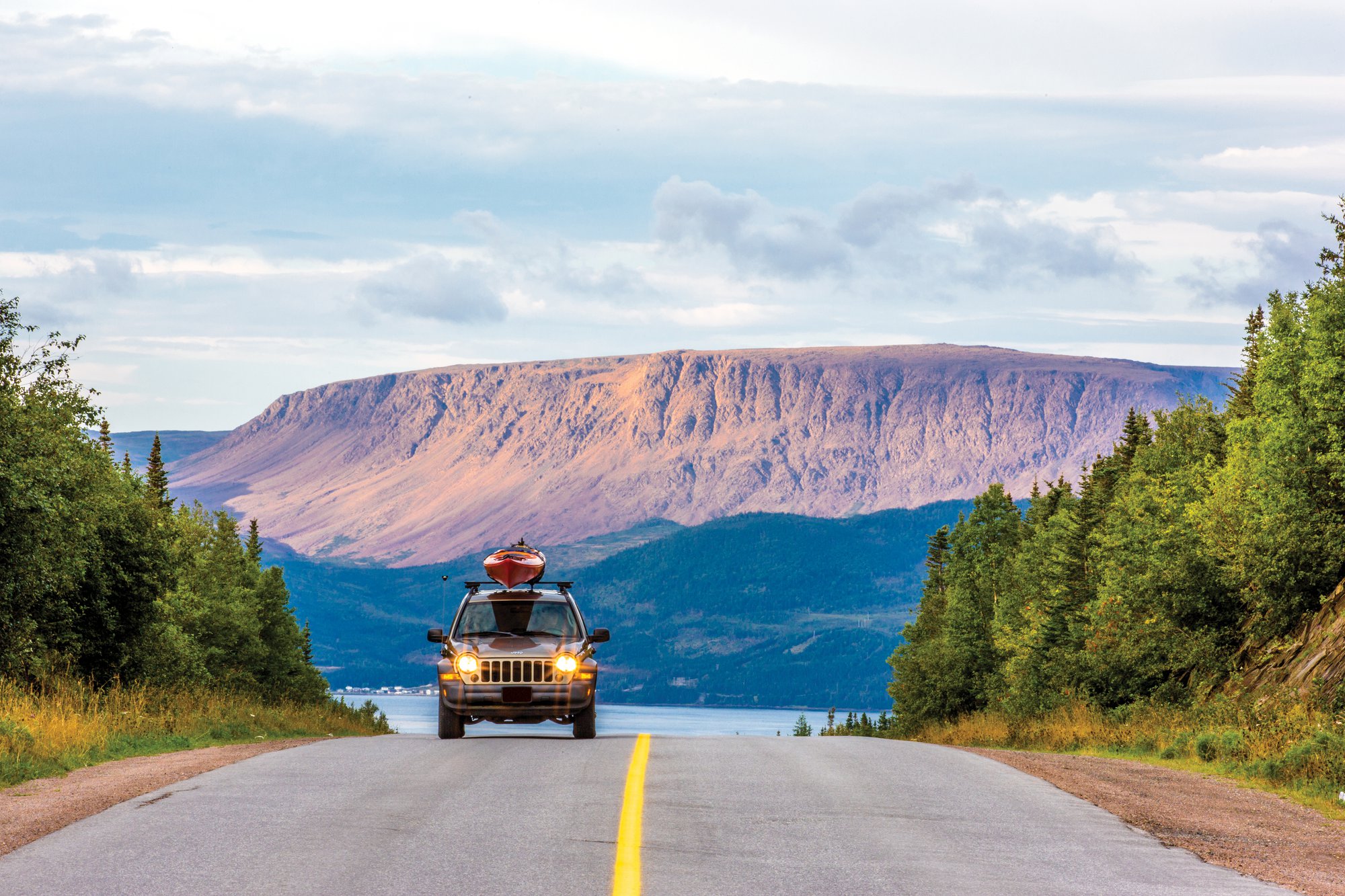
Gros Morne National Park anchors the western coast and carries UNESCO World Heritage status. The park contains ancient exposed mantle rock, glacially carved fiords, and Western Brook Pond, an inland fiord where boat tours pass beneath cliffs rising 600 metres above the water.
The Viking Trail runs north from Deer Lake through the Northern Peninsula to L'Anse aux Meadows, the only confirmed Viking settlement in North America and another UNESCO site, and one of the quieter places on the continent to sit with a thousand years of history.
A ferry across the Strait of Belle Isle connects to Labrador, where Red Bay, a 16th-century Basque whaling station, is the third UNESCO designation on this route and among the least-visited archaeological sites in Canada.
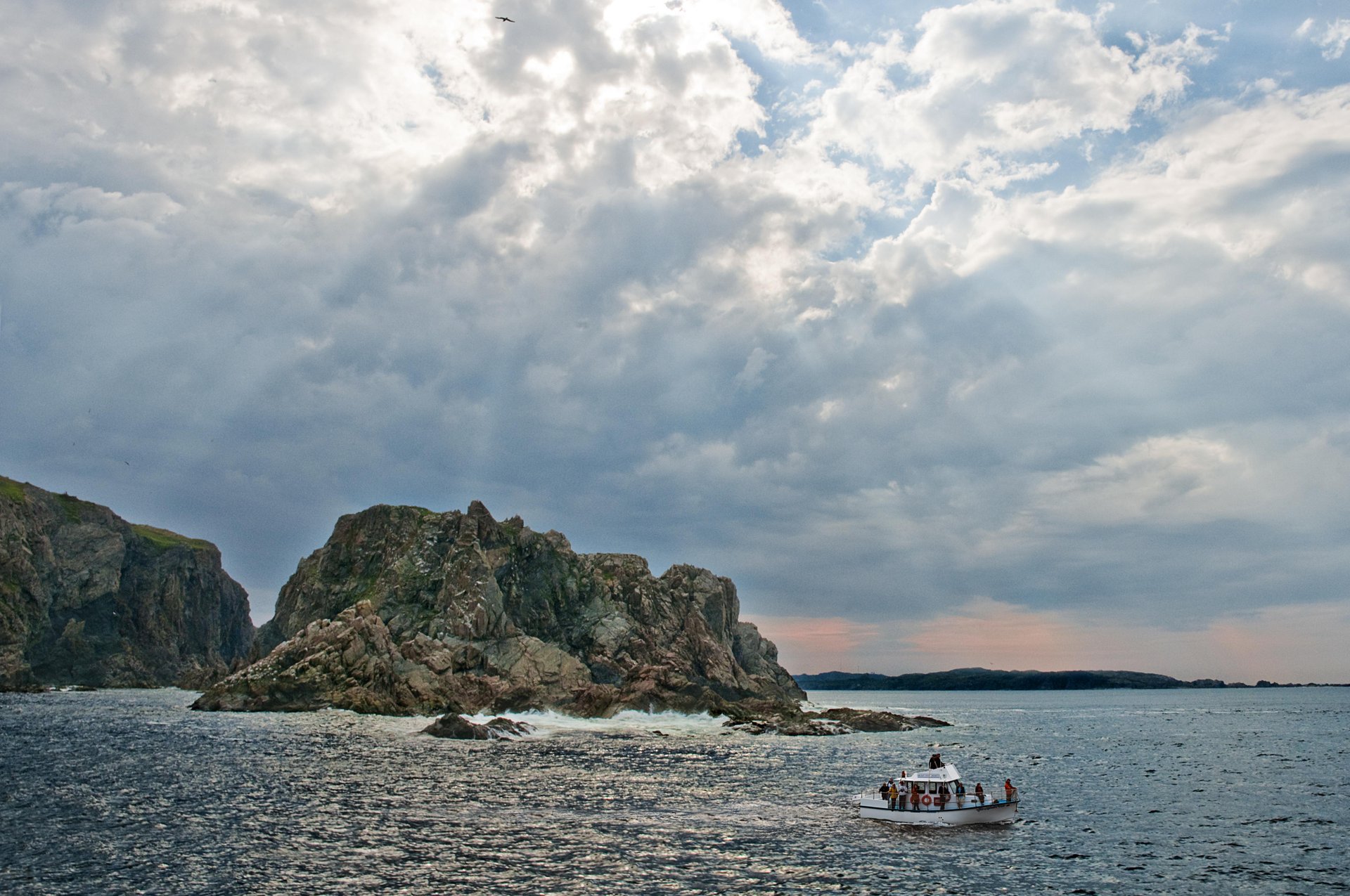
Icebergs drift through Iceberg Alley from late May through early July. Whale watching runs through summer along the Northern Peninsula. Puffin boat tours operate at Witless Bay Ecological Reserve, south of St. John's, from June through August.
Cape Spear, the most easterly point in North America, sits just outside St. John's. Standing at the lighthouse, with nothing between you and Europe but open ocean, the geography becomes physical.
The Drive the Viking Trail itinerary covers the Northern Peninsula over seven days. For a longer route across the island, Atlantic Treasures: Newfoundland & Labrador runs 12 days from Deer Lake to St. John's, taking in the Viking Trail, Labrador, Gros Morne, the Bonavista Peninsula, and Witless Bay. Three UNESCO sites. One long, rewarding drive.
Nova Scotia Road Trips: From Fishing Villages to Celtic Highlands

Nova Scotia shifts character as you move through it. The South Shore is a historic coastal region with iconic lighthouses, and fishing towns. The Annapolis Valley is wine country lined with orchards and dykelands. Cape Breton is mountain, forest, and ocean in one long loop.
Lunenburg, on the South Shore, is one of only two urban North American communities designated a UNESCO World Heritage Site, recognised for its colonial-era street grid and painted wooden architecture. It's worth at least a full day, ideally two. Nearby, Peggy's Cove sits on a granite point above the North Atlantic, one of Canada's most photographed coastlines.
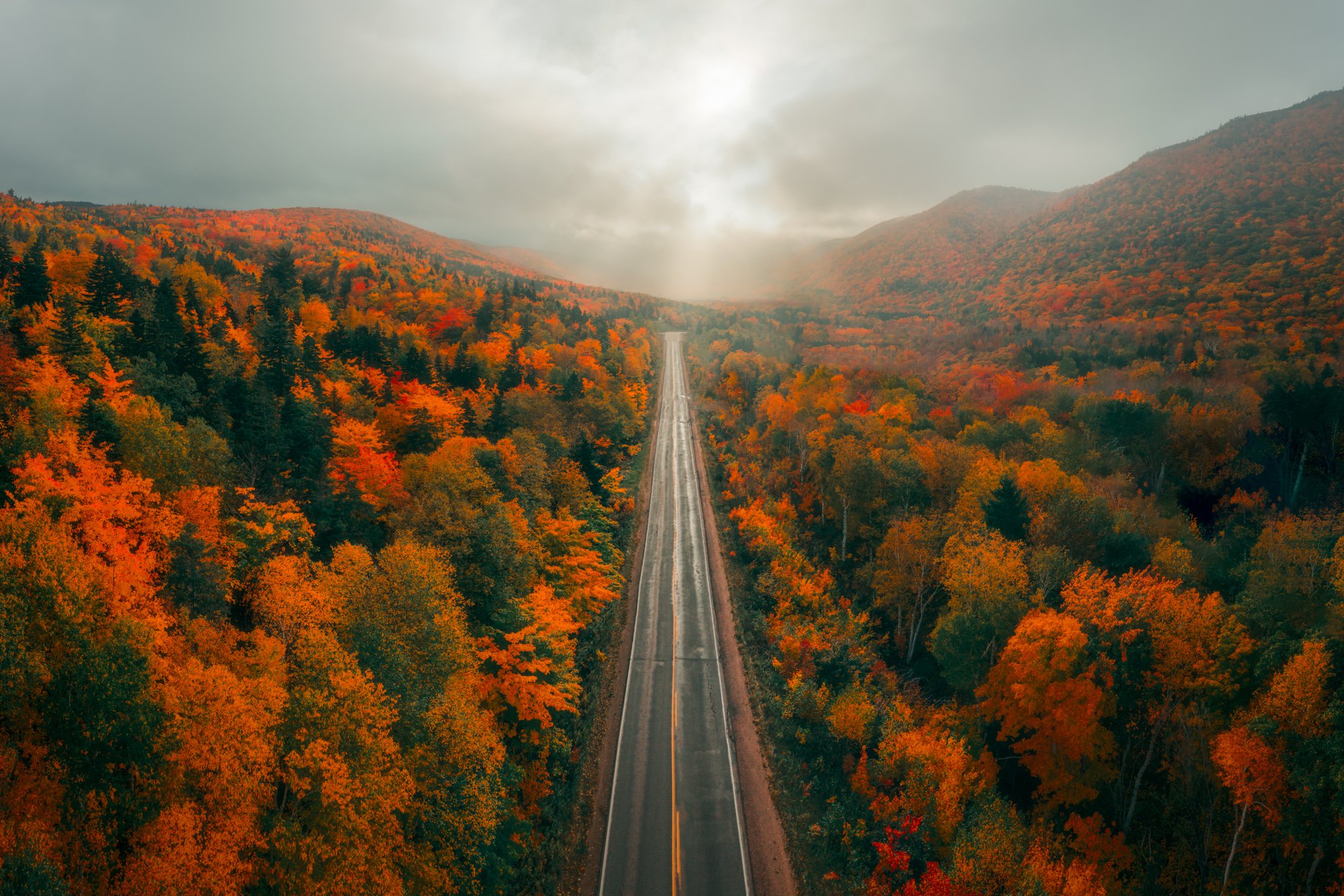
The Cabot Trail on Cape Breton Island is a 298-kilometre loop through Cape Breton Highlands National Park. The road climbs above the treeline, then drops sharply toward the ocean. You'll want to stop more than once to take it all in.
The Skyline Trail, a 9-kilometre loop accessed from the Cabot Trail, winds through boreal forest to a headland overlooking the ocean. Moose, bald eagles, and pilot whales are all possible to spot without leaving the path.
In Mabou, the Glenora Distillery produces Canada's only single malt whisky, with tours running through summer. Down the road, the Red Shoe Pub hosts live Celtic music most evenings. It's the kind of session that keeps you longer than planned.
Two itineraries cover Nova Scotia in depth. The Halifax to the Highlands route runs eight days from Halifax through Mabou, the Cabot Trail, and Baddeck, where the Alexander Graham Bell National Historic Site is located.
For a longer journey, the Sea to Stars: Nova Scotia in Depth itinerary spans 14 days and connects four UNESCO designations, including a two-night stay at Trout Point Lodge in the Southwest Nova Biosphere Reserve, a certified Dark Sky Preserve where the Milky Way is visible on a clear summer night.
Prince Edward Island Road Trips: Slow Roads Through Red Clay Country

Prince Edward Island is small enough to cross in an hour but worth taking a week over. The island moves at its own pace: red soil, green fields, and beaches warm enough to swim in through July and August.
The Confederation Bridge, a 12.9-kilometre span across the Northumberland Strait, is the longest bridge over ice-covered waters in the world. Crossing it from New Brunswick, you feel the island before you arrive.
Prince Edward Island National Park runs along the island's north shore, protecting dune beaches and red sandstone cliffs. Green Gables Heritage Place, the farmhouse that inspired Lucy Maud Montgomery's Anne of Green Gables, draws visitors from Japan, Korea, the United States, and across Europe. For many, it's the reason they've come to Atlantic Canada at all.
The food on PEI is straightforward and good. Lobster suppers in church halls and seafood shacks are an institution. The island also has a growing wine and craft beverage scene worth exploring.
PEI connects naturally into a multi-province route. The Atlantic Canada: Highlands and Islands itinerary links Halifax, Lunenburg, PEI, and Cape Breton over eight days, with a lobster dinner and ferry crossings included. For those who also want New Brunswick, the Exploring the Maritimes itinerary spans 13 days from Halifax, taking in Hopewell Rocks, Lunenburg, the Confederation Bridge, Green Gables, and the Fortress of Louisbourg.
A Few Things Worth Knowing Before You Go
All of these itineraries are self-drive, which suits Atlantic Canada well. The region rewards slow travel and unscheduled stops. A Parks Canada Discovery Pass covers entry to national parks across all four provinces and pays for itself quickly if you're visiting more than two or three sites.
Car rental is available in all major centres. Renters must be 21 or older; drivers under 25 may be subject to a surcharge depending on the operator. Newfoundland itineraries that end in St. John's rather than returning to the starting point involve a one-way drop fee.
The season runs from late May to early October, with June through September being the most reliable window across all four provinces. Some experiences (icebergs, certain whale species, nesting seabirds) are tightly seasonal and worth timing around.
Accommodation across these routes ranges from full-service hotels in Halifax and St. John's to heritage inns, coastal lodges, and a few properties worth travelling for on their own, including the Algonquin Resort in Saint Andrews, the Keltic Lodge on the Cabot Trail, and the eco-focused Trout Point Lodge in Nova Scotia's Tobeatic wilderness.
The Atlantic Coast Stays With You
Atlantic Canada has a quality that's hard to name while you're in it. It might be the absence of crowds in places that deserve attention. The way the landscape shifts from pastoral to wild in the space of an hour. The way people in small coastal communities talk to strangers. They're not surprised you turned up. Just glad you did.
Plan a route, build in time to get lost, and let the tides set the pace.