
Top 5 Ways To Discover Alberta’s Badlands

How to Explore the Alberta Badlands: A Guide to Southeast Alberta’s Dramatic Landscape
Alberta’s Badlands span over 90,000 square kilometres of dramatic desert-like terrain in southeast Alberta, centred around Drumheller. This region offers world-class dinosaur fossil sites, Indigenous cultural experiences, unique geological formations like hoodoos, spectacular sunsets, and dark-sky stargazing.
Plan 2-3 days minimum to explore the main attractions, including the Royal Tyrrell Museum, Dinosaur Provincial Park (UNESCO World Heritage Site), and Writing-on-Stone Provincial Park. Best visited May through September for warm weather, though shoulder seasons offer quieter experiences. Road-trip accessible from Calgary (90 minutes to Drumheller).
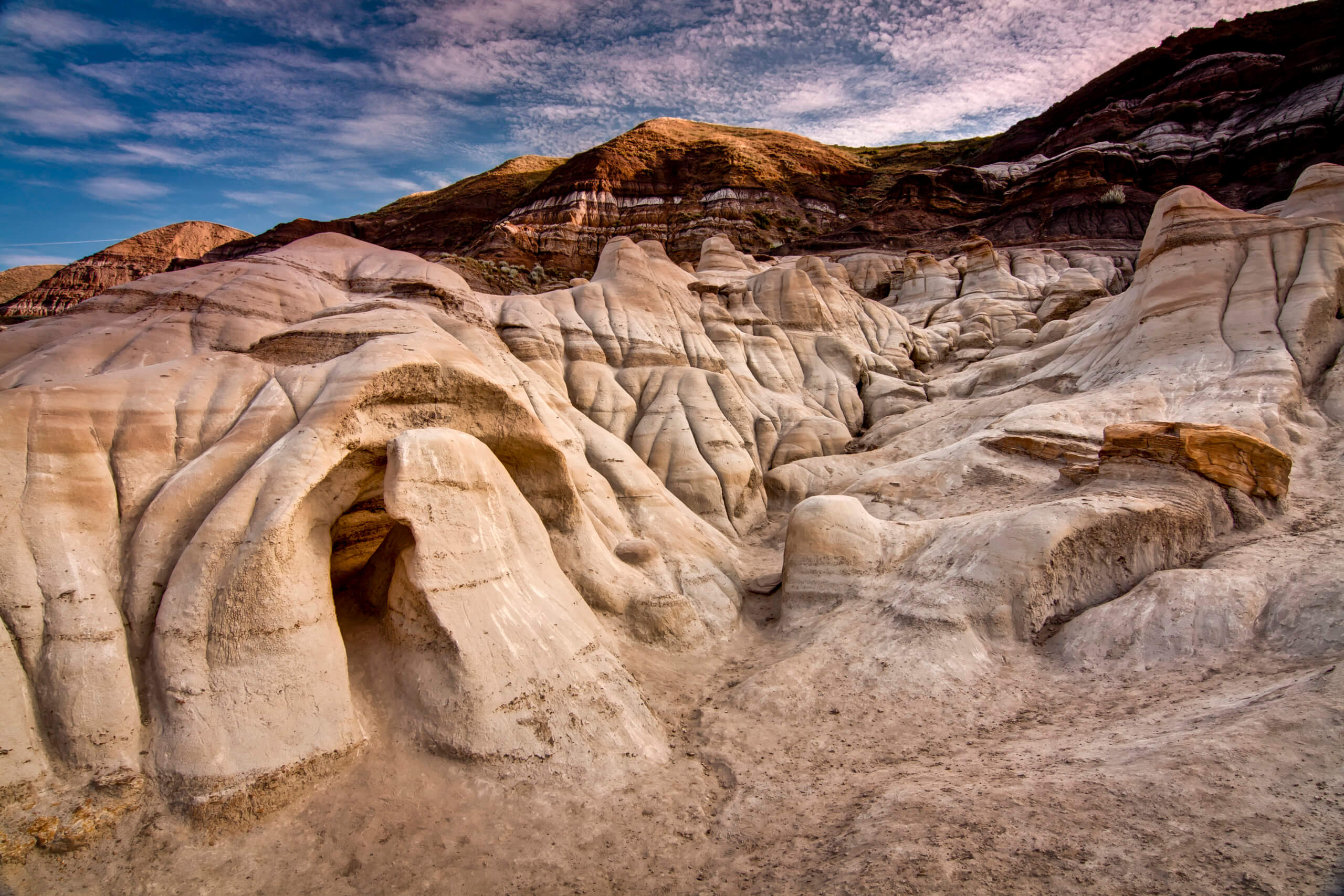
The Badlands landscape. Photo by Jeremy Klager
The scenery is otherworldly and the adventure is memorable: Alberta’s Badlands reveal a side of Canada few expect to find. Here, layered sedimentary rock formations rise from semi-arid valleys, fossil beds preserve 75 million years of history, and the land tells stories that stretch from deep time to living Indigenous tradition.
This guide covers what to know before you visit Alberta’s Badlands, from the region’s main attractions to practical planning details that help you make the most of your time in this distinctive landscape.
Related: Riding Alberta’s Cowboy Trail — another route through southern Alberta’s ranch country
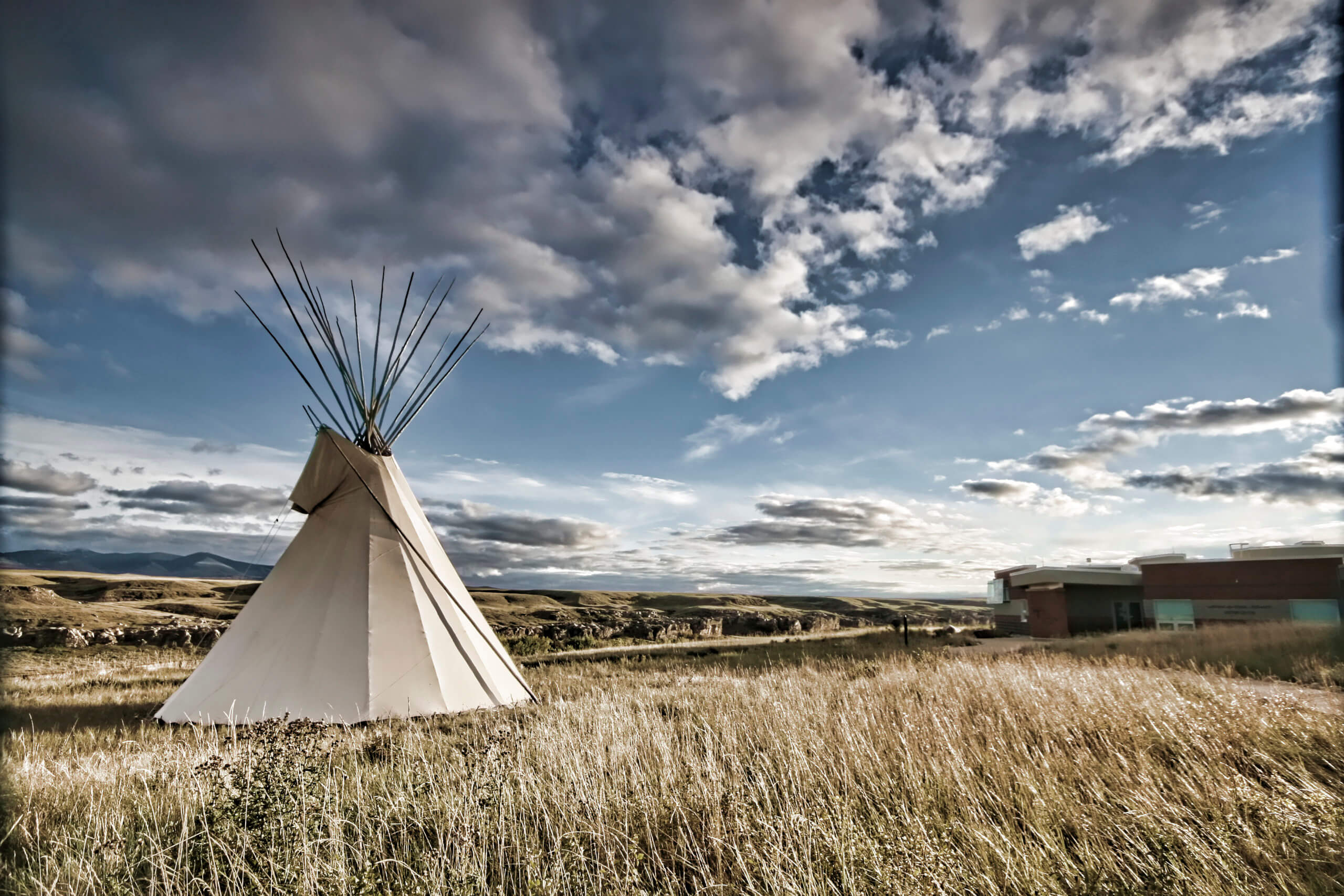
Tipi at Writing-on-Stone Visitor Centre. Photo by Parks Canada
Where Are the Alberta Badlands?
Alberta’s Badlands occupy more than 90,000 square kilometres in the province’s southeast corner. The region extends east from Calgary to the Saskatchewan border, and from Red Deer in the north to the U.S. border in the south. Drumheller serves as the primary hub, located about 135 kilometres northeast of Calgary, roughly 90 minutes by car.
The Badlands formed over millions of years as rivers carved through soft sedimentary rock, exposing layers of sandstone, mudstone, and coal. The result is a semi-arid landscape of coulees (steep-sided valleys), hoodoos (pillared rock formations), and exposed fossil beds that make this one of the world’s richest sources of dinosaur remains.
Getting There and Around
Most visitors arrive by car from Calgary via Highway 9 or the more scenic Highway 56. The region rewards road-trip exploration with key sites spread across several hours of driving. Renting a vehicle is recommended. Fill up on fuel in larger towns, as services become sparse between communities.
When to Visit Alberta’s Badlands
Best Overall: Late May through early September brings warm, dry weather ideal for hiking and outdoor exploration. Expect daytime temperatures of 20-30°C.
Shoulder Season (April, October): Fewer crowds, cooler temperatures (10-15°C), and dramatic light for photography. Some sites may have reduced hours.
Winter (November-March): Cold and often windy, but the Royal Tyrrell Museum remains open year-round. Snow highlights the contours of the landscape, though access to remote trails may be limited.
5 Essential Ways to Experience Alberta’s Badlands
1. Follow the Dinosaur Trail
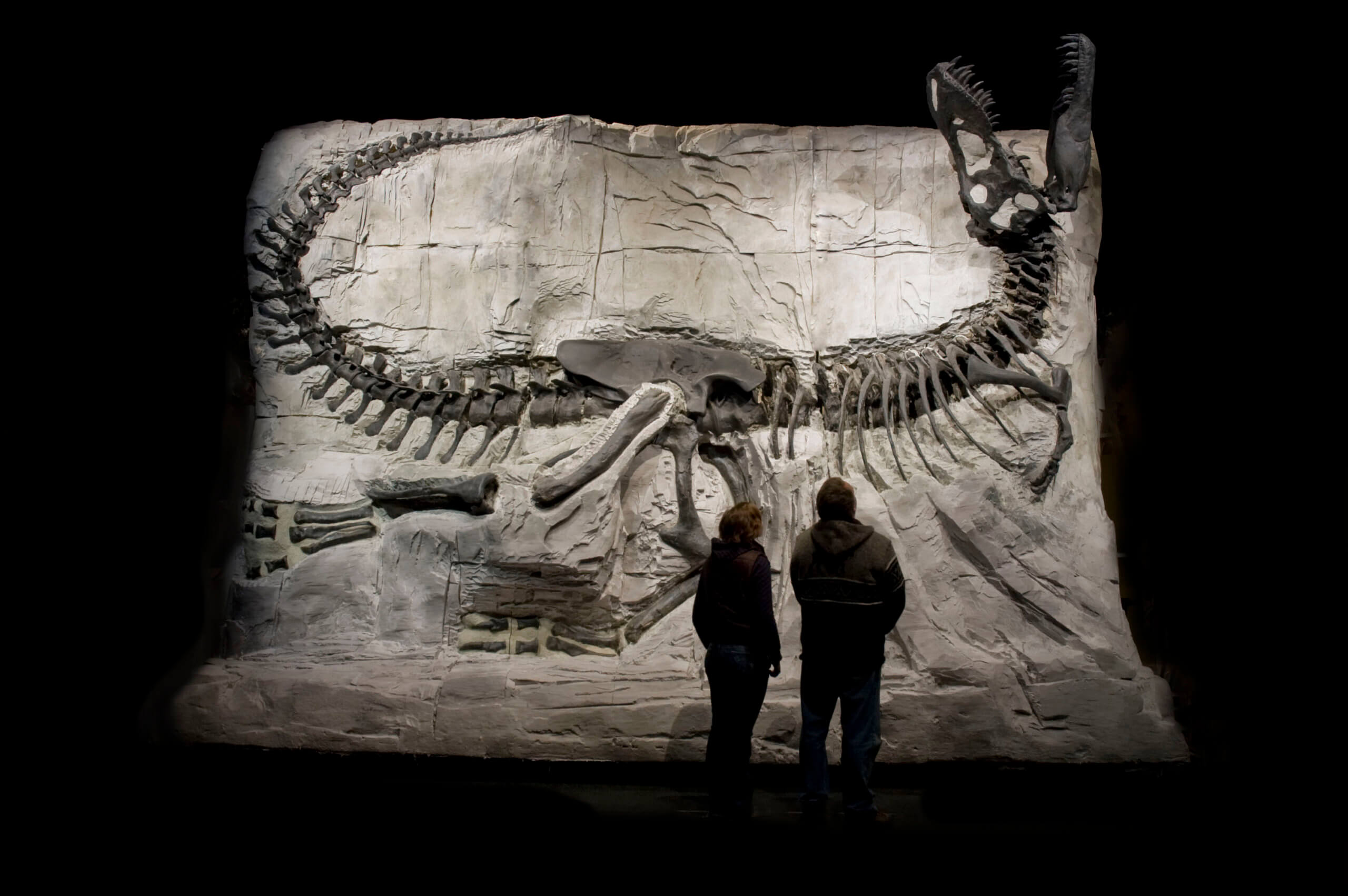
Photo c/o Royal Tyrell Museum
Seventy-five million years ago, the region now known as the Alberta Badlands was a subtropical floodplain where dinosaurs thrived. Today, those ancient residents are the area’s most famous draw. The fossil record here is exceptionally rich — new discoveries continue regularly.
Royal Tyrrell Museum
Located in Drumheller, the Royal Tyrrell Museum houses one of the world’s largest displays of complete dinosaur skeletons. Exhibits explain the science of palaeontology and the region’s geological history through interactive displays and fossil specimens. The museum is open year-round (closed Mondays from mid-October through mid-May). Plan at least 2-3 hours for a thorough visit.
Practical Details:
- Admission: Adults $21, Youth (7-17) $10, Children under 7 free (2024 rates)
- Guided hikes and dig experiences available seasonally (book in advance)
- On-site café and gift shop
Dinosaur Provincial Park
Designated a UNESCO World Heritage Site in 1979, Dinosaur Provincial Park protects one of the most significant fossil beds on Earth. More than 50 dinosaur species have been identified here, with over 500 specimens now housed in museums worldwide.
The park offers self-guided trails through the badlands landscape, but the richest fossil areas are accessible only through guided tours led by park interpreters. These excursions run from late May through August and should be booked well ahead.
Practical Details:
- Located 220 km southeast of Calgary (~2.5 hours)
- No entrance fee to the park
- Admission fee applies for the Visitor Centre exhibit gallery
- Guided tours available seasonally (fees apply; advance booking strongly recommended)
- Campground available (reservations open in January)
Related: Canada’s Cultural UNESCO World Heritage Sites and Canada’s Natural UNESCO World Heritage Sites
2. Learn Indigenous History and Traditions

Guided tour at Writing-on-Stone Provincial Park/Áísínai’pi. Photo by Travel Alberta/Davey Lieske
The Alberta Badlands have been home to Indigenous peoples for thousands of years, long before the dinosaurs were discovered in the rock. Archaeological evidence places human presence in the region as far back as 3,500-4,000 years. The land holds deep cultural significance, particularly for the Blackfoot Confederacy and other First Nations.
Writing-on-Stone Provincial Park / Áísínai’pi
Writing-on-Stone Provincial Park, also known by its Blackfoot name Áísínai’pi (“it is pictured/written”), protects the largest concentration of Indigenous rock art on the North American Great Plains. Petroglyphs (carved images) and pictographs (painted images) cover sandstone cliff faces along the Milk River valley, some dating back over 1,000 years.
The park sits within traditional Blackfoot Territory. Guided tours led by Indigenous interpreters explain the cultural and spiritual importance of the site, the stories contained in the rock art, and the ongoing connection between the land and the people who have stewarded it for millennia.
Practical Details:
- Located 340 km southeast of Calgary (3.5 hours)
- No park entrance fee
- Guided tours essential for accessing protected rock art areas (May-September; fees apply, advance booking recommended)
- Campground and comfort cabin accommodation available
For additional Indigenous-led experiences across Alberta, visit Indigenous Tourism Alberta to connect with certified operators and cultural guides.
3. Explore the Unique Topography
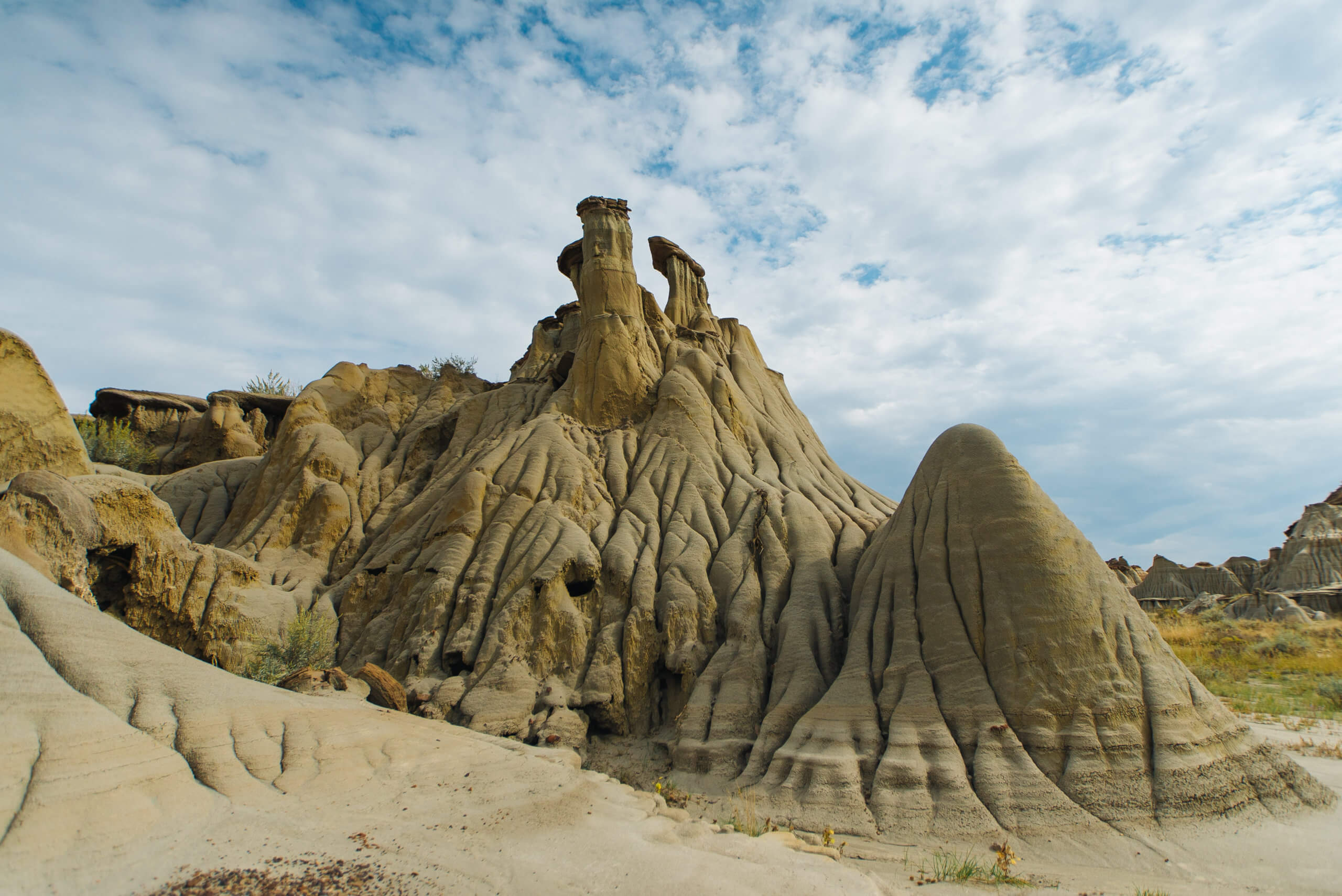
Hoodoos in the badlands of Dinosaur Provincial Park. Photo by Andy Best
The Badlands landscape is defined by its dramatic erosional features with hoodoos, coulees, and layered sedimentary formations that shift in colour from rust red to pale grey depending on the light.
Hoodoos
Hoodoos are tall, narrow pillars of soft sedimentary rock topped with a harder capstone that protects the column from erosion. Over time, wind and water carve away the surrounding material, leaving these distinctive spires standing alone.
The Hoodoos Trail southeast of Drumheller offers close access to a protected cluster of these formations. The short interpretive trail (1.5 km return) includes viewing platforms and informational signage explaining how these structures form and why they’re so fragile. Visit early morning or late afternoon for the best light and fewer crowds.
Other Notable Badlands Landscapes:
- Horsethief Canyon: A viewpoint 17 km southwest of Drumheller with sweeping vistas across layered coulees
- East Coulee: A historic coal-mining town with badlands scenery and the Atlas Coal Mine National Historic Site
- Orkney Viewpoint: Accessible lookout near Dinosaur Provincial Park
Walking these landscapes requires sturdy footwear and sun protection as the terrain is uneven, and shade is minimal.
4. Experience the Light: Sunsets in the Badlands
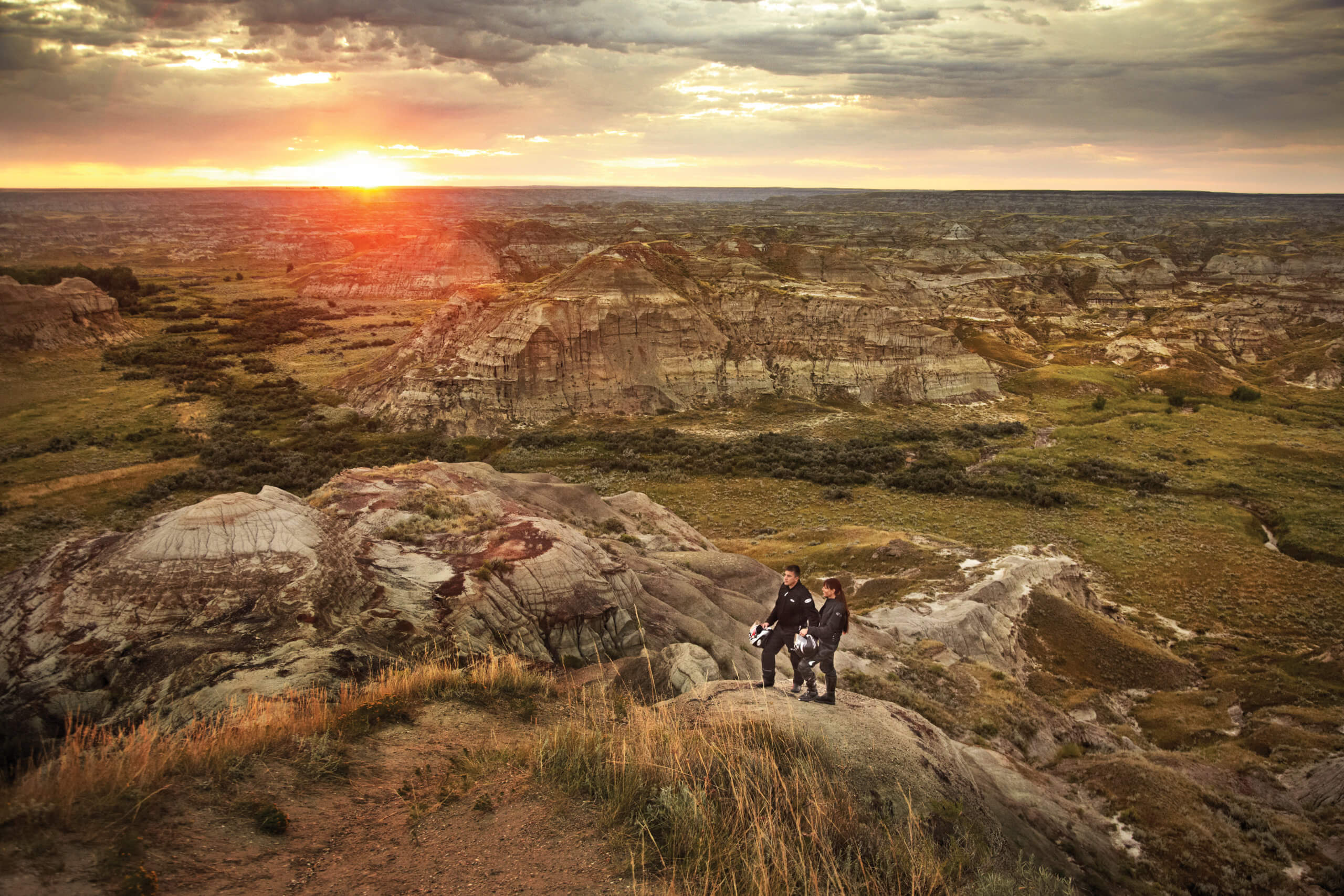
Sunset at Dinosaur Provincial Park. Photo by Travel Alberta/George Simhoni
The interplay of light and landform is one of the Badlands’ most compelling features. At sunset, the angled rays illuminate the sedimentary layers in shifting tones from ochre, rust, grey, and gold. Shadows deepen the coulees while the ridgelines glow.
Recommended sunset viewpoints include Horsethief Canyon, Orkney Viewpoint, and anywhere along the secondary roads that wind through Dinosaur Provincial Park. Arrive 30-45 minutes before sunset to watch the transformation unfold. Bring layers as temperatures drop quickly once the sun sets.
5. Discover Dark Skies After Nightfall

Starry sky over the badlands. Photo by Parks Canada
Once the sun sets and the colour fades, the Badlands reveal another dimension. With minimal light pollution across much of the region, the night sky becomes vividly clear. On cloudless nights, the Milky Way stretches overhead in dense, luminous bands. When solar activity cooperates, the aurora borealis may appear along the northern horizon.
Dinosaur Provincial Park has been recognized for its naturally dark skies and occasionally hosts astronomy programming during summer months. Camping overnight in the park or at Writing-on-Stone offers the best opportunity to experience the full depth of the night sky framed by the silhouettes of hoodoos and eroded bluffs.
Stargazing Tips:
- Check moon phases — new moon periods offer the darkest skies
- Download a stargazing app to identify constellations and planets
- Bring a red-filtered flashlight to preserve night vision
- Dress warmly, even in summer (desert nights can be cool)
Planning Your Visit to Alberta’s Badlands
How Much Time to Spend
- One Day (Drumheller Focus): Royal Tyrrell Museum, Hoodoos Trail, Horsethief Canyon viewpoint
- Two Days: Add Dinosaur Provincial Park with a guided fossil tour
- Three Days or More: Include Writing-on-Stone Provincial Park, East Coulee, and time for sunrise/sunset/stargazing
What to Pack
- Sun protection: hat, sunscreen, sunglasses (UV exposure is high in open terrain)
- Sturdy walking shoes with good tread
- Layered clothing (temperatures swing significantly between day and night)
- Water (carry at least 2L per person for hiking)
- Camera with extra batteries
- Binoculars for wildlife and stargazing
Where to Stay
Drumheller: Range of motels, inns, and vacation rentals; central base for exploring the region
Dinosaur Provincial Park: Campground with both reservable and first-come sites; group camping available
Writing-on-Stone Provincial Park: Campground and tipi accommodation (book early)
Brooks or Medicine Hat: Larger towns with more accommodation options, useful for multi-day road trips
Responsible Travel in the Badlands
The landscape is fragile and culturally significant. Visitors can help protect it by:
- Staying on marked trails to prevent erosion
- Never removing fossils, rocks, or artifacts (all are protected by law)
- Packing out all waste
- Respecting cultural sites and following guidance from Indigenous interpreters
- Supporting local businesses and Indigenous-led tourism operators
- Avoiding climbing on or touching hoodoos and rock art
Why the Alberta Badlands Matter
The Alberta Badlands are a meeting place of deep time, Indigenous tradition, and ongoing discovery. The fossils preserved in these rocks tell the story of life on Earth during the late Cretaceous period. The petroglyphs and pictographs honour millennia of human presence and cultural continuity. And the landscape itself, shaped by wind, water, and time, invites travellers to slow down and pay attention to the forces that create and reshape our world.
Need some help planning a trip to the Alberta Badlands? Get in touch. We’d be glad to help design an itinerary that honours both the land and the communities who care for it.
This article was originally published July 15, 2022. It has been updated for accuracy and the most current information.