
Exploring the 100 Wild Islands of Nova Scotia


Taylor Head. Photo by Adam Hill
Just an hour east of Halifax, a sprawling archipelago stretches along Nova Scotia’s Eastern Shore. Most travellers drive right past it. The 100 Wild Islands (282 islands in total, scattered between Clam Harbour and Mushaboom Harbour) form one of the largest coastal island wilderness areas in the province, and one of the least visited. That combination is rare, and it won’t last forever.
This guide covers what the islands are, how to visit them responsibly, and why they deserve a place on any serious Nova Scotia itinerary.

The Wild Islands. Photo c/o Tourism Nova Scotia
What are the 100 Wild islands?
The archipelago actually contains 282 islands of varying sizes, part of a broader grouping known as the Eastern Shore Islands. Three of the islands exceed 500 acres, placing them among the largest in Nova Scotia. Seven more clock in at over 200 acres, and 127 are at least an acre in size. The rest are small, rocky outcrops that barely clear the waterline.
But size isn’t the point. Together, the islands function as one interconnected ecosystem. The Nova Scotia Nature Trust’s has made ongoing efforts to protect them through the 100 Wild Islands Legacy Campaign. To date, over 85% of the archipelago is protected.
What makes the 100 Wild Islands scientifically significant is their condition. When researchers with the Nature Trust began surveying the islands, they found coastal ecosystems representing every habitat type in the province. Many had not been disturbed by humans since the last ice age, more than 10,000 years ago. Coastal rainforests, boreal bogs, saltmarshes, eelgrass meadows, freshwater lakes, and globally rare lichens all coexist here within a 30-kilometre stretch of coastline.
The islands also serve as critical nesting habitat for over 120 bird species, including several at risk. For that reason, responsible access matters.
Where are the 100 Wild Islands located?
The archipelago runs along Nova Scotia’s Eastern Shore, roughly between Clam Harbour and Mushaboom Harbour, with Taylor Head Provincial Park marking the northern edge of the main cluster. From Halifax, Highway 7 east will get you there in about an hour.
The access point you choose depends on how you plan to explore. Clam Harbour Beach Provincial Park is a useful southern landmark. Murphy’s Camping on the Ocean, located near the village of Clam Harbour, is the most established base for boat-based island access and offers guided tours directly into the archipelago.
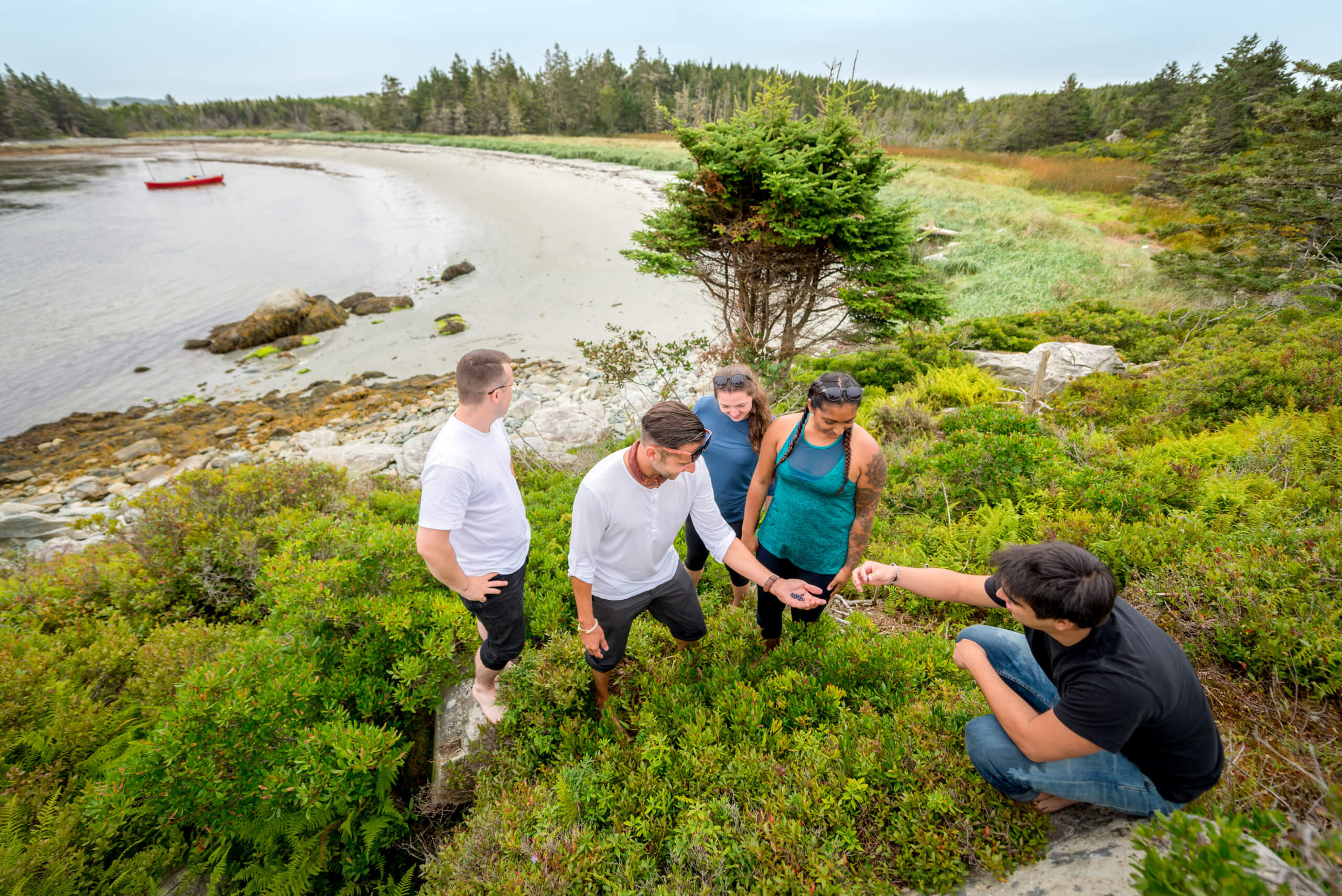
Photo by Patrick Rojo c/o Tourism Nova Scotia
Here is a video to show you some of the coastal beauty:
How to Visit the 100 Wild Islands
By Sea Kayak
Sea kayaking is the most intimate way to experience the islands. Paddlers can navigate narrow channels between islands, pull up onto white sand beaches, and access coves that boats can’t easily reach. The put-in at Mason Cove, accessed via Coastal Adventures in Tangier, is a popular starting point for multi-day routes.
The conditions require respect. The islands offer shelter in calm weather, but exposed sections along the outer edges can build steep swells quickly when wind picks up. Tidal currents shift the landscape throughout the day. Anyone planning a paddling trip should check conditions carefully, paddle with experience appropriate to open coastal water, and consider going with a guide on a first visit.
Camping is permitted on Crown land islands within the Eastern Shore Islands Wilderness Area, which covers Crown-owned islands from Clam Harbour to Liscomb. The Nature Trust-protected islands have their own access guidelines, so check with the Nova Scotia Nature Trust before landing on any island you’re unsure about.
By Guided Boat Tour
For those who want to see the islands without the logistics of a multi-day paddle, local operators offer several options. They’ll offer island drop-off day trips that deliver visitors to a private island for the day, with pickup in the afternoon. Overnight island camping adventures are also available for those who want to sleep under the stars without paddling there themselves. Their scenic boat tours cover over 100 islands in a single outing, giving a broad sense of the archipelago’s scale and variety.
As a Day Trip from Halifax
The islands are close enough to Halifax to visit in a day, which is worth knowing if you’re building a Nova Scotia itinerary from the city. A morning departure on Highway 7, a few hours on or around the water, and you’re back in Halifax for dinner. That said, the islands reward slowing down. A two-night stay in the area allows for a fuller experience of the tides, the light, and the quiet.
What to Expect on the Islands
The landscape varies considerably from one island to the next. Some of the larger islands have beautiful white sand beaches and turquoise coves that look more like the tropics than Atlantic Canada. Others are covered in dense moss-laden forest or open bog. Named islands worth seeking out include Borgles Island, known for its sandbar tombolo connecting to Middle Island; Baltee Island, with its small pocket beaches and exposed cliff views; Wolfes Island, which has the archipelago’s largest white sand beach; and Shelter Cove, accessible on foot at low tide from the mainland.
Wildlife sightings are common. Harbour porpoises, grey seals, bald eagles, and various seabirds are regular companions along the water. The clear water around many of the islands reveals kelp beds, eelgrass, lobsters, and other marine life visible from a kayak or even while wading in the shallows.
When to Visit
Summer (July and August) offers the warmest water temperatures and the most settled paddling conditions. The days are long, the sand beaches are at their best, and boat tours run regularly. Shoulder season, particularly June and September, brings quieter conditions and is often preferred by experienced paddlers.
Winter access is limited and only suitable for those with specific cold-water skills and equipment. Spring can be productive for birding during migration, but water conditions are unpredictable.
Visiting Responsibly
The 100 Wild Islands remain intact because they’ve been largely left alone. The Nature Trust asks visitors to follow Leave No Trace principles, avoid nesting areas during the spring and early summer breeding season, and be mindful of where they land and camp. Fires should be kept to established sites where permitted.
Supporting local operators keeps the economic benefit of tourism in the community and helps ensure knowledgeable, conservation-minded guides are showing people the islands.
Planning Your Nova Scotia Trip
The 100 Wild Islands pair well with a broader Eastern Shore itinerary. Sheet Harbour, Liscomb, and Sherbrooke are all within reasonable driving distance and offer their own reasons to stop. If you’re travelling from Halifax, combining a day or two on the Eastern Shore with time in the city gives a more complete picture of what Nova Scotia’s Atlantic coastline actually looks like beyond the Cabot Trail.
Interested in building a Nova Scotia itinerary around the islands and Eastern Shore? Browse our Nova Scotia getaways or reach out to plan something custom.
Interested in a Nova Scotia getaway? Check out our Nova Scotia getaways or reach out to plan a custom itinerary.
Frequently Asked Questions
What are the 100 Wild Islands in Nova Scotia? The 100 Wild Islands are an archipelago of 282 islands located along Nova Scotia’s Eastern Shore, between Clam Harbour and Mushaboom Harbour. They’re one of the largest protected coastal island wilderness areas in the province, managed in large part by the Nova Scotia Nature Trust.
How do you get to the 100 Wild Islands? Most visitors access the islands by sea kayak or guided boat tour. Local operators offer boat tours and island drop-off services. Kayakers typically launch from Mason Cove with local operators. The area is about an hour east of Halifax along Highway 7.
Can you camp on the 100 Wild Islands? Yes, camping is permitted on Crown land islands within the Eastern Shore Islands Wilderness Area. You should confirm access guidelines with the Nova Scotia Nature Trust for islands under their stewardship before landing or camping.
Are the 100 Wild Islands open to the public? Yes, most of the islands are open to the public for responsible exploration. The Nature Trust asks visitors to follow Leave No Trace practices and avoid disturbing nesting wildlife, particularly in spring and early summer.
When is the best time to visit the 100 Wild Islands? July and August offer the warmest conditions and the most reliable access by kayak and boat. June and September are quieter and well-suited for experienced paddlers.