
Ethical Wildlife Viewing: How to Watch Wildlife in Canada Without Doing Harm


Canada’s wildlife is extraordinary. Grizzly bears emerging from their dens in the Rockies. Thousands of sandpipers lifting off a mudflat in a single wave. Orcas cutting the surface of the Salish Sea. These are some of the most extraordinary wildlife moments anywhere in the world, and they happen every April and May right here in Canada. Ethical wildlife viewing means showing up for these moments in a way that puts the animal first. For conservation-minded travellers, that changes how you approach the experience entirely.
Spring is the season when wildlife is most vulnerable. Here’s how to be a thoughtful presence in the field.
Four Rules for Ethical Wildlife Viewing
We asked Madyson Taylor, one of Landsby’s destination specialists, to share the principles she returns to again and again. These four rules apply whether you’re watching bears from a roadside pullout in Banff or scanning for whales from a zodiac in the Salish Sea.
“For a wildlife enthusiast, spotting a ‘bucket list’ species is often the peak of an adventure. While the urge to move closer for the perfect photo is natural, it is vital to remember that wild animals are unpredictable. Prioritizing safety — both yours and theirs — is the only way to ensure these encounters remain a highlight rather than a hazard.” — Madyson Taylor, Destination Specialist, Landsby
1. Keep Your Distance
The rule of thumb is literal: if you can’t completely cover the animal with your thumb held at arm’s length, you’re too close. Each species also has a legal or recommended minimum distance — 100 metres for grizzly bears, 200 metres if cubs are present, and 1,000 metres for Southern Resident killer whales as of April 2026. These aren’t suggestions. They exist because human presence costs animals energy they can’t afford to lose.
2. Don’t Share Your Snacks
If you’re close enough to feed an animal, you’ve already broken rule one. Beyond the risk of physical harm, feeding wildlife leads to habituation — animals lose their instinct to avoid people, and that almost always ends badly for the animal. The saying holds: “A fed bear is a dead bear.” Keep all food stored, sealed, and out of reach.
3. Respect Wild Instincts
If an animal spots you and moves away, that’s your cue to stop. Don’t follow. Don’t try to reposition for a better angle. That animal is telling you something, and respecting that boundary is part of ethical viewing. If you are fortunate enough to cross paths with a wild animal, enjoy the moment, but always allow them the space to move away.
4. Hire a Guide
“Hiring a professional guide is one of the best ways to ensure a safe, respectful encounter. Their expert knowledge of animal behaviour helps predict movements before they become stressful for the wildlife — or the traveller. Local guides provide invaluable ecological context, allowing you to find elusive species without the risks associated with navigating unfamiliar terrain on your own.” — Madyson Taylor, Destination Specialist, Landsby
To find a guide who actually walks the walk, look for companies that understand animal behaviour rather than promising a “guaranteed” interaction. Check their site for a clear code of ethics or look for local conservation certifications to make sure they aren’t using shortcuts like baiting or crowding. Ultimately, you want a guide who’s more excited about keeping the animals safe than they are about getting you a viral photo.
What This Looks Like in Practice
Grizzly Bears
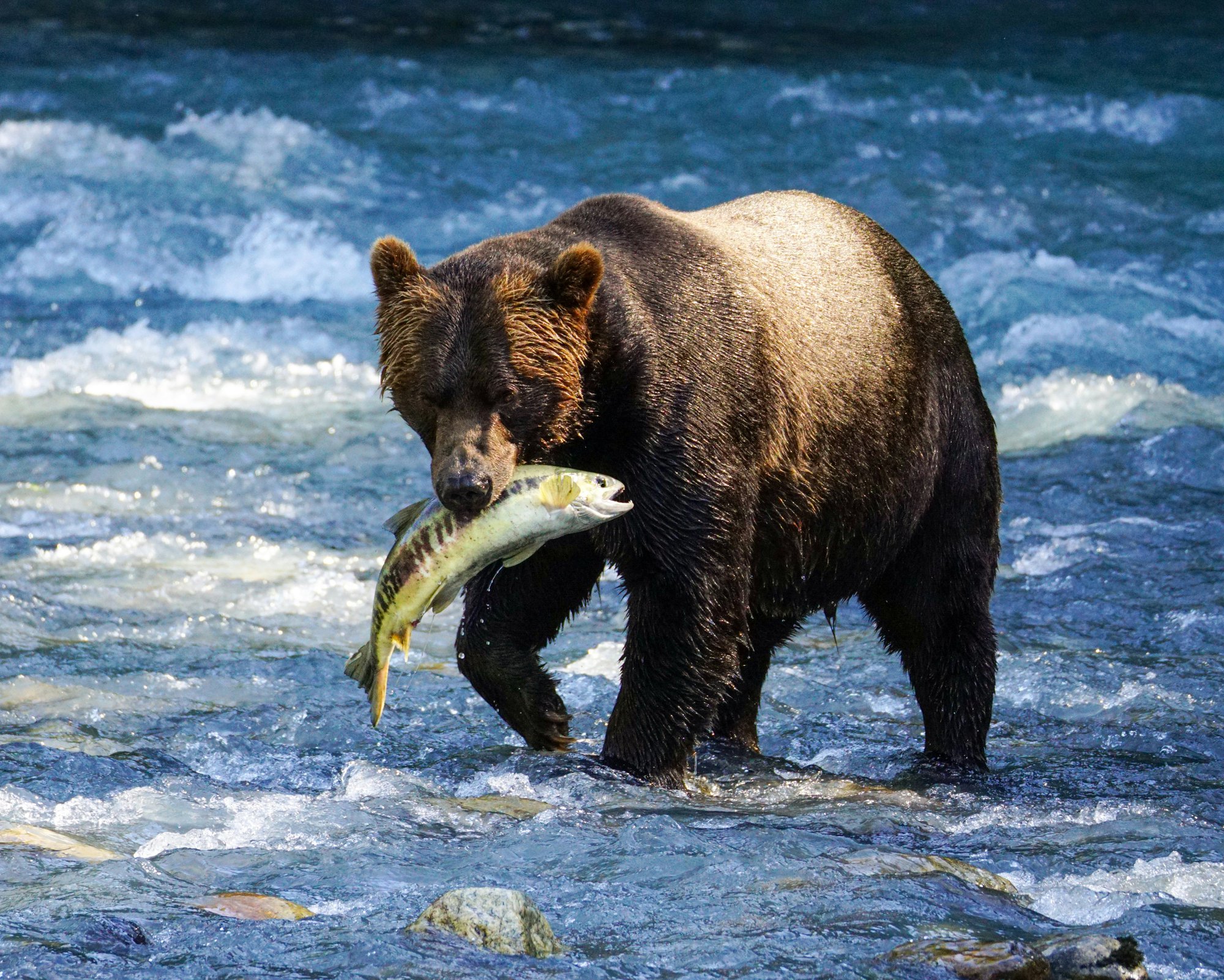
When grizzlies emerge from their dens in the Canadian Rockies — usually from mid-April at lower elevations — they’re hungry. Months of hibernation have left them with a serious nutritional deficit. Dandelions and clover green up early along roadsides, and bears will tolerate human presence to reach them.

That tolerance has a cost. A bear that stops feeding to go on alert burns energy it cannot afford to lose in April. Parks Canada estimates there are roughly 65 grizzly bears in Banff and about 109 in Jasper. Every individual counts.
Stay in your vehicle unless you’re in a designated pullout. The Bow Valley Parkway closes from 8 p.m. to 8 a.m. between March 1 and June 25 to protect bear and wolf denning habitat. Follow it.
For a more meaningful bear encounter, consider Landsby’s Northern Vancouver Island Explorer — an 8-day self-guided journey that includes a full-day Indigenous-led grizzly and whale-watching tour in the Broughton Archipelago.
Shorebirds
Every spring, one of the great biological events in the western hemisphere passes through Canada largely unnoticed. Sandpipers staging along BC’s Fraser Delta and New Brunswick’s Bay of Fundy are fuelling up for non-stop trans-oceanic flights of 3,000 to 4,000 kilometres. The energy they build on these mudflats is what gets them to the Arctic to breed.
A single off-leash dog can flush thousands of birds at once. That forced flight burns exactly the reserves these birds came here to build. Keep dogs leashed. Stick to established dyke trails and viewing platforms. Log your sightings on eBird or iNaturalist — citizen data feeds the research that protects these birds.
Southern Resident Orcas

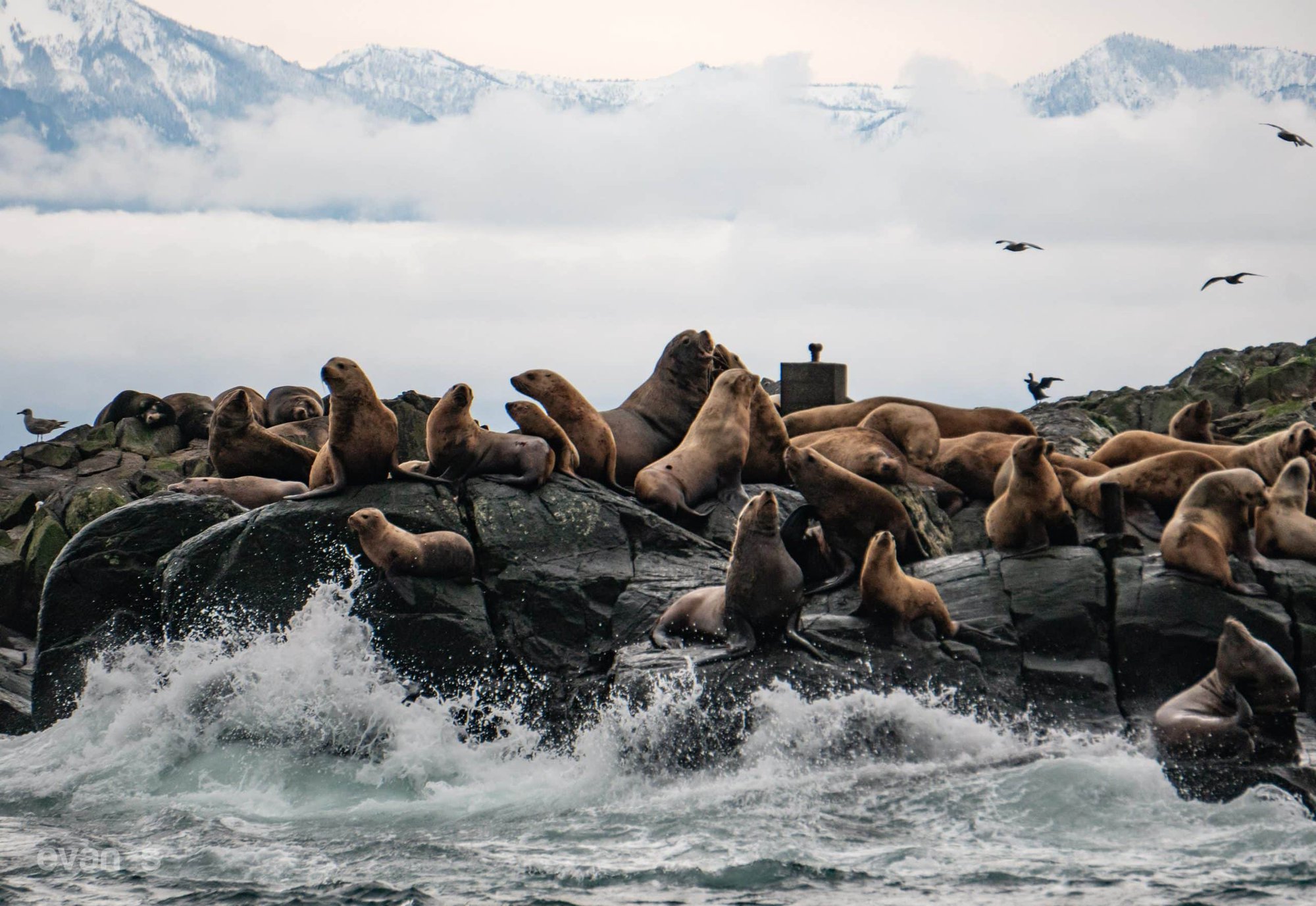
As of February 2025, only 73 Southern Resident orca whales remain. The three primary threats to this population are vessel disturbance, declining Chinook salmon, and accumulated environmental pollutants.
In April 2026, Canada increased the required approach distance for Southern Residents to 1,000 metres. Before booking a whale watching trip out of Victoria, Sidney, or Telegraph Cove, ask your operator directly: Do they hold a current Transport Canada authorization? Do they follow the 1,000-metre rule? Do they cut engine power when whales are nearby?
Bookmark Be Whale Wise for the latest guidelines before any on-water trip in the Salish Sea.
Woodland Caribou
Woodland caribou don’t get the same attention as grizzly bears. That’s part of why their situation has become so serious. Spring is calving season. Cows leave the herd to give birth alone, and spatial isolation is their primary defence against predators. A hiker off-trail, a drone overhead, or an ATV on a resource road can register as a threat. Disturbed cows move into less suitable terrain. Calves that become separated face much higher predation risk.
Stay on marked trails. Respect seasonal closures in the backcountry zones of Jasper, Wells Gray, and the Caribou Mountains of northern Alberta. It’s one of the most meaningful things a spring traveller can do.
Where Your Money Goes Matters
Ethical wildlife viewing isn’t just about how you behave in the field. It’s also about who you support. Wilderness lodges that direct a portion of revenue toward grizzly research, salmon recovery, and Indigenous-led conservation are doing something a roadside pullout never will.
Organizations like Wildlife Conservation Society Canada, the Nature Conservancy of Canada, and Birds Canada are doing the long work that makes any of this possible.
Spring is when some of the most important conservation outcomes are decided — one encounter at a time. A bear that feeds undisturbed through a morning. A flock of sandpipers that completes a full tide cycle. A caribou cow that calves in peace.
You can be part of that.
Browse Landsby’s full collection of wildlife experiences across Canada to find guided, thoughtfully designed encounters in every region and season.
Current regulations for Southern Resident killer whales are updated regularly by Transport Canada and Fisheries and Oceans Canada. Always check the latest rules before heading out on the water. Parks Canada’s road closure schedules are posted seasonally at parkscanada.gc.ca.
About Madyson Taylor:
As an advocate of responsible travel, Madyson is passionate about crafting experiences that connect travellers with the heart of a destination through food, culture, nature and respectful wildlife observation. Madyson has travelled extensively through South East Asia, has worked in a remote nature preserve in Costa Rica and continues to seek out meaningful travel experiences both near and far from her home in Ontario.