

Whale Watching in Canada: Best Places, Times & Species by Region

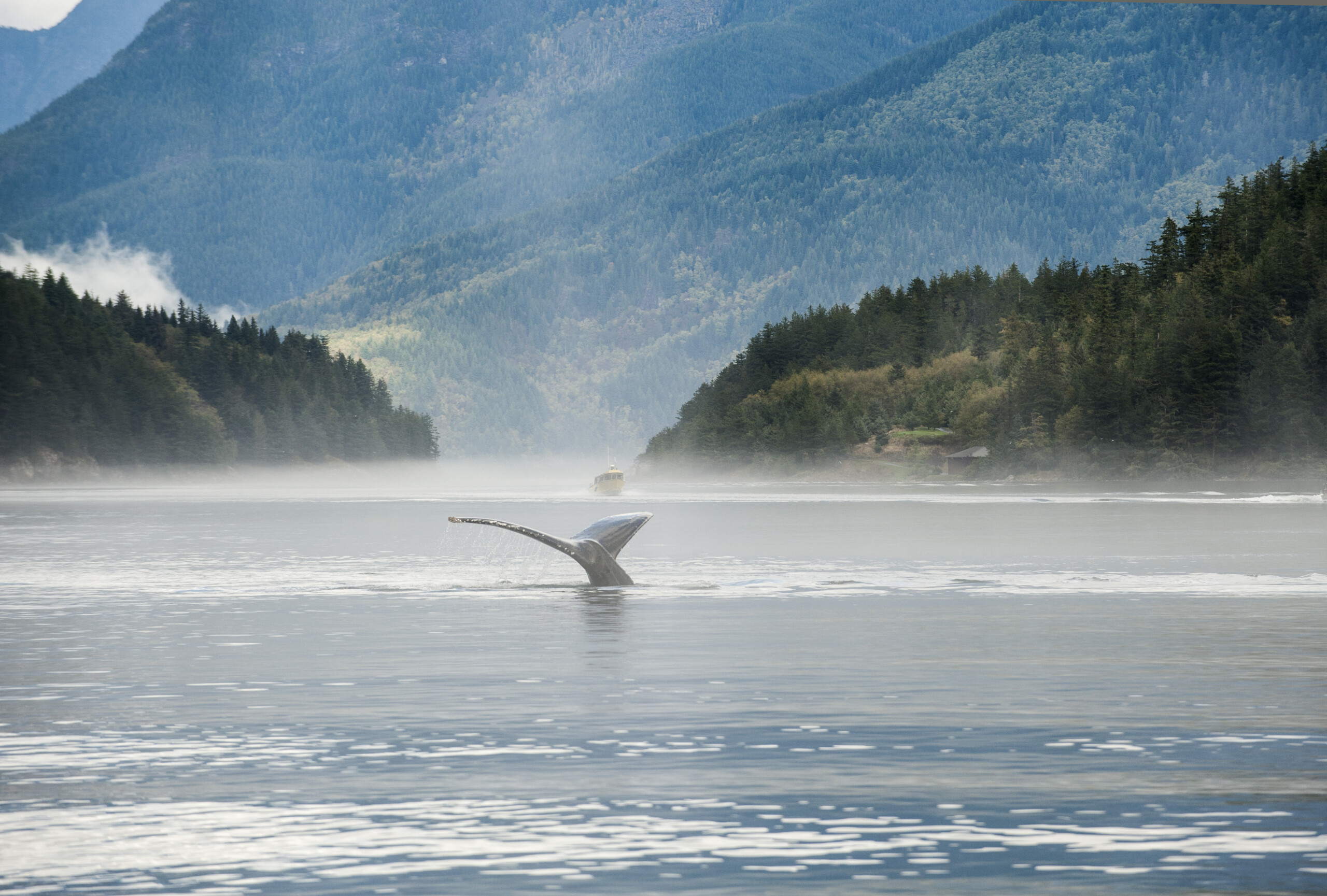
Whale watching in Canada is possible on three coasts: the Pacific, the Atlantic, and the Arctic, nearly 250,000 kilometres of shoreline. Close to 30 species either live in or migrate through Canadian waters each year, from humpbacks and orcas to belugas and narwhals. Each region offers a different experience, shaped by season, ecosystem, and the communities that have long called these coastlines home.
When Is the Best Time to Go Whale Watching in Canada?

Photo by GREMM (Group for Research and Education on Marine Mammals)
The best time to go whale watching in Canada is May through October, though the ideal window depends on your destination and target species.
Whales are separated into two main categories — toothed and baleen — and both kinds can be spotted here. Some of the more popular and most recognizable varieties of toothed whales include the majestic orca (killer whale), the magical narwhal and the playful white beluga. Baleen whales tend to be bigger and include the giant blue whale, the unmistakable humpback and the graceful minke.
Ready to go whale watching in Canada? Here’s what you need to know to start planning your trip. Don’t hesitate to reach out to us if you’d like us to plan an ultimate Canadian whale itinerary.
West Coast: Guide to Whale Watching in British Columbia
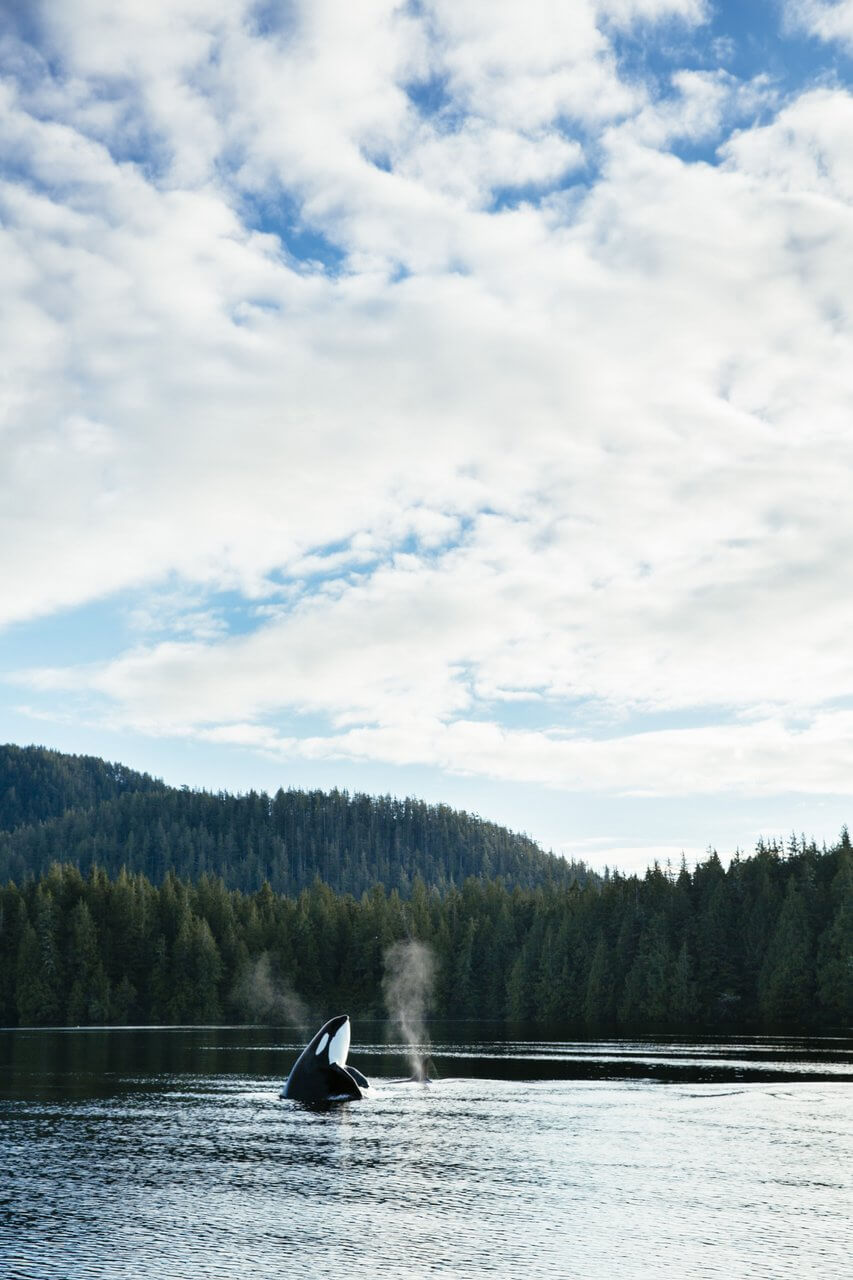
Tofino, BC. Photo by Jeremy Koreski (BC Tourism)
Canada’s West Coast is a popular jumping off point for many incredible whale experiences. Thousands of whales migrate into the waters up and down British Columbia’s coast each year and some pods even live in those waters year round.
Vancouver
Vancouver is one of the most popular destinations in the world for viewing whales and the star attraction is undoubtedly the orca. Pods of resident orcas, highly endangered, live off the Vancouver coast in the Salish Sea year round, feasting mainly on salmon. Bigg’s killer whales (known as transient orcas — ones that feed on mammals such as seals) also migrate into the area seasonally. Visiting humpback whales make their way through the area in both spring and fall — although some hang around throughout the summer as well — and can also be spotted in the Salish Sea.
Vancouver Island
March marks the beginning of the gray whale migration from the warmer waters of the southern Pacific up to Alaska. During the spring (and then again in the fall as they reverse course) thousands of these beautiful baleen whales can be seen along the coast of Vancouver Island in places such as Tofino and Ucluelet. Although many of these whales will continue on to Alaskan waters for the summer, about 200 of them continue to stay near Vancouver Island (joining their orca and humpback cousins).
Pacific Coast, British Columbia
Further up the coast, the Great Bear Rainforest is one of the most magical places to go whale watching. Imagine visiting a remote wilderness where you spend your days exploring lush estuaries and stunning inlets — only to be surprised by a close encounter with a visiting pod of whales. Wildlife can’t be scheduled but these remote adventures sure make it fun to search. Recently, the elusive fin whales have started to return to the waters of Kitimat Fjord in the Rainforest, joining humpbacks, gray whales and orcas.
Visit Landsby’s British Columbia Experiences page for amazing adventures that will bring you into the heart of whale territory.
East Coast: Guide to Whale Watching in Atlantic Canada
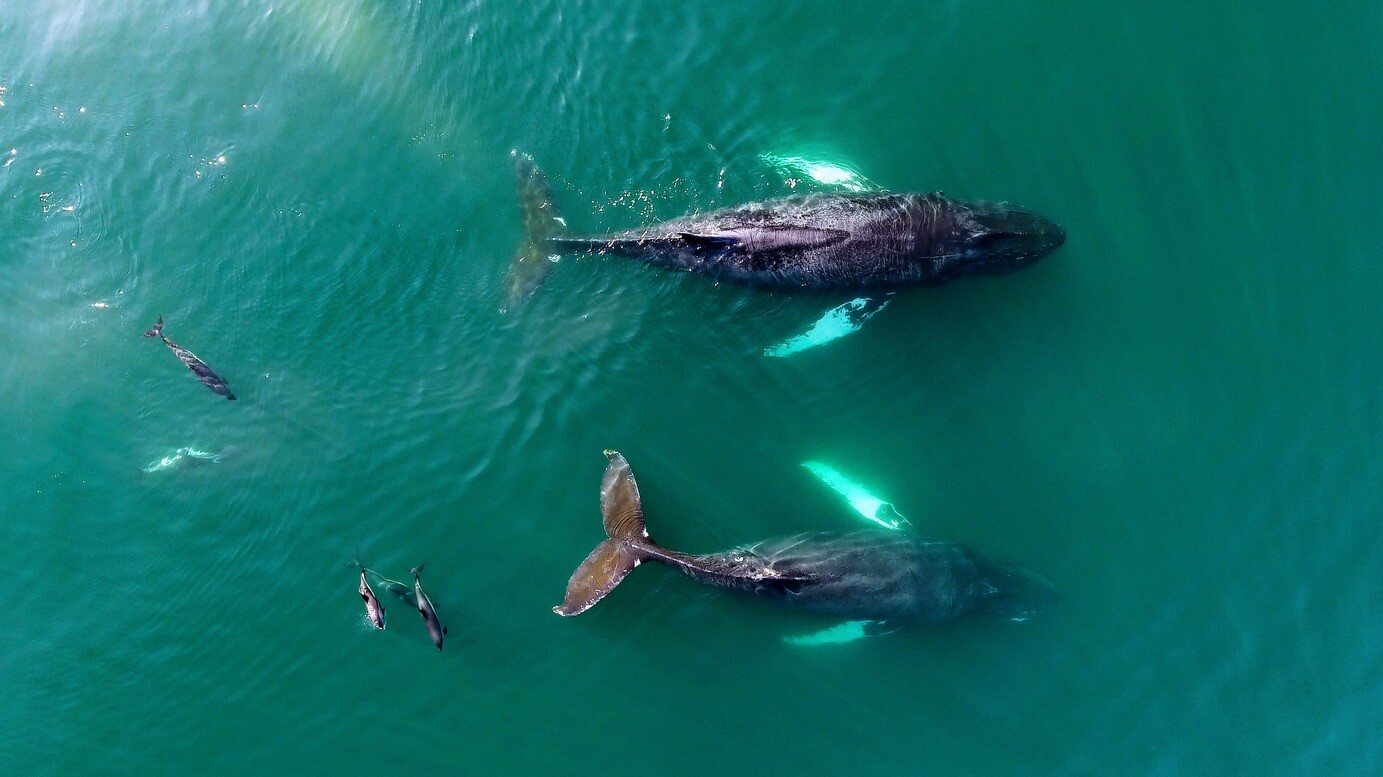
Whales and dolphins in the Bay of Fundy
As the North Atlantic ocean crashes into Canada’s eastern seaboard, it creates a dramatic landscape that is home to thousands of marine mammals, including nearly two dozen species of whale.
Newfoundland and Labrador
The waters of Newfoundland and Labrador are a rich ecosystem that play host to the largest population of humpback whales in the world. They return here year after year to feed on capelin, squid and krill, joining other whales that love this coast, such as minke, sperm, orca and blue whales. May through September is the best time to visit Newfoundland and Labrador for whale watching, with peak season falling right in the middle of summer (mid-July to mid-August). It is possible to spot up to 22 different species of whale in Newfoundland, making it an incredible destination for whale watchers. If you arrive earlier in the season, you might be able to catch a glimpse of another incredible giant: an iceberg. A whale breeching in front of a floating iceberg = pure magic!
Browse Landsby’s Newfoundland Experiences for your ultimate holiday to Canada’s easternmost province.
Maritimes: New Brunswick, Nova Scotia, and Prince Edward Island
Summer and fall are the best times to see whales in the Maritime provinces. About a dozen different whale species populate the waters around Nova Scotia, Prince Edward Island and New Brunswick. The most commonly spotted whale species are the minke, humpback, fin and pilot. Although rare, it is also possible to spot the endangered North Atlantic right whale, as well as sperm, orca and the occasional blue whale.
In Nova Scotia, whale watching tours can be found all around the province including Halifax and the south shore, Brier Island and up the Bay of Fundy coast, and on Cape Breton. There’s really no bad spot in Nova Scotia to go whale watching and you can definitely spot whales from the shore as you explore all this beautiful province has to offer.
Browse Landsby’s Nova Scotia trips to find the right itinerary for your vacation.
In New Brunswick, the Bay of Fundy is the place to be if you want to see whales. As the world’s highest tides come in and out of the bay twice each day, they bring with them an abundance of whale food (plankton, krill and lots of fish varieties). This, along with the secluded nature of the bay, draws in some of the world’s biggest whales, including fin, humpback, minke and the right whale. St. Andrews is a popular whale watching destination in New Brunswick, as is Grand Manan Island and Campobello Island.
Related: Best Coastal Towns to Visit on a New Brunswick Road Trip
Guide to Whale Watching in Québec
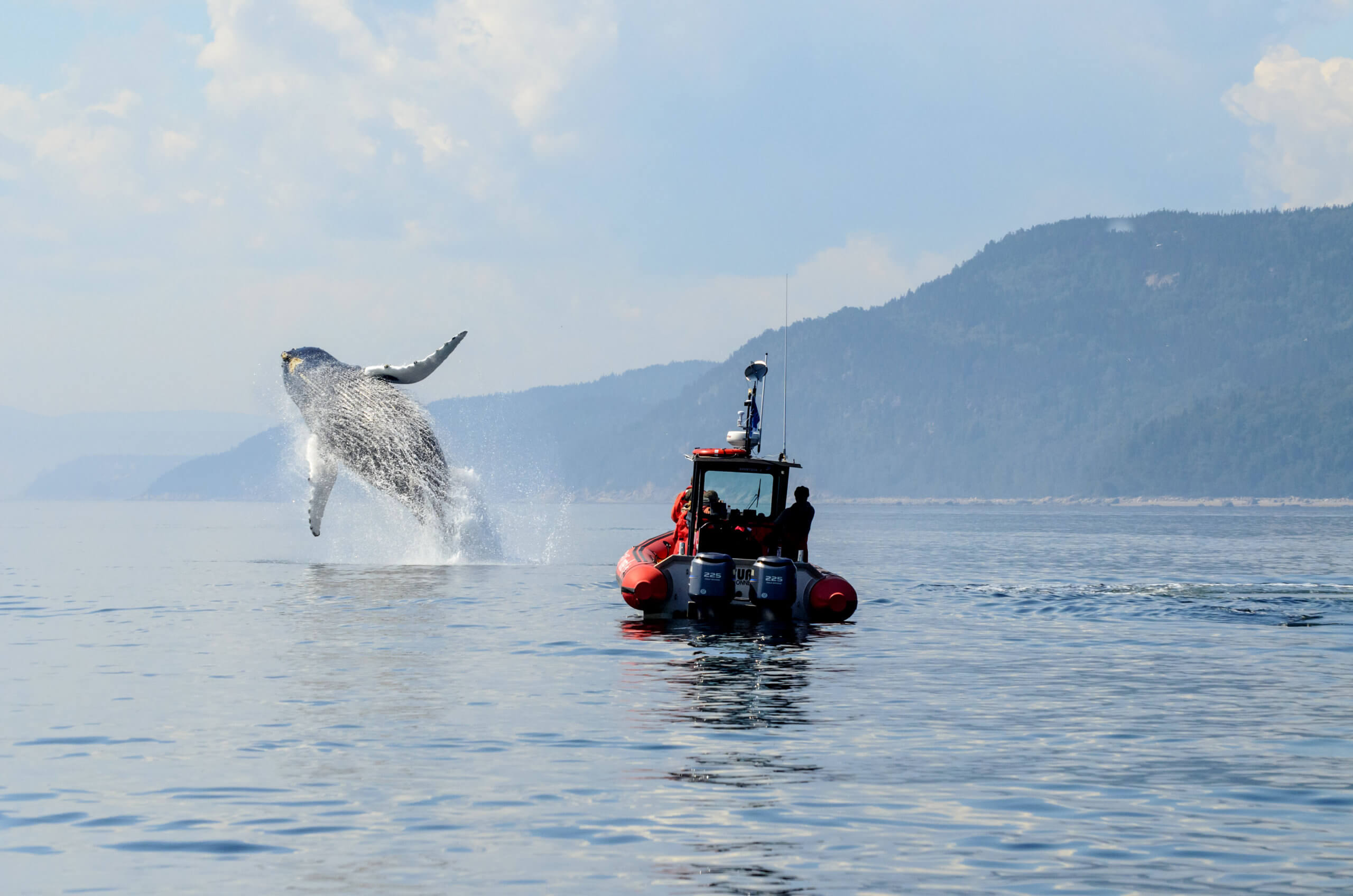
An upclose encouter with a humpback whale
One of Canada’s most incredible provinces in which to spot whales is Quebec, where more than a dozen species can be found in the St. Lawrence Estuary from about May until October.
Travel just a few hours east of Quebec City and you’ll find yourself in the heart of Quebec’s whale watching region. Follow the St. Lawrence River from the province’s capital through to the beautiful Charlevoix region and you’ll find yourself in whale territory. At this point the St. Lawrence is more like a sea — wide and cold, with fresh water mixing with the salt water coming from the Atlantic.
The waters off the coast of Tadoussac, which sits at the confluence of the St. Lawrence and the Saguenay River, are home to the southernmost pod of beluga whales (nearly a thousand of them call these waters home year round) and occasionally play host to blue whales — the largest animals to ever exist (yes, bigger even than the largest dinosaurs).
Other whales to be found in this region include minke, humpback and fin. Follow the Whale Route, from Tadoussac to Blanc-Sablon in the Côte-Nord region for spectacular scenery and even more places to spot these majestic creatures. Where the St. Lawrence River empties into the Gulf, you’ll find a fascinating amount of marine life. On the east side of the St. Lawrence Estuary is Quebec’s Gaspesie peninsula where whale watchers have an even better chance of seeing blue whales, as well as fin, humpback and minke whales.
See Landsby’s Quebec Experiences for ideas on how to experience the province and its wildlife.
Related: The Schooners of Charlevoix and Navigating the Saguenay Fjord
North Coast: Guide to Viewing Whales on the Arctic Shores and in Hudson Bay

Belugas in Churchill Manitoba
For those adventurous souls who want to see the stunning northern wilderness as well as arctic marine life, the best place to go is in northern Manitoba.
The northern Manitoba town of Churchill, which sits on the shores of Hudson Bay, is a popular place to view the Northern Lights and polar bears, but it is also home to a large population of migrating beluga whales. In the summer, 60,000 belugas visit the Hudson Bay and some 3,000 of those enter the Churchill River.
Related: The magic month of August in Churchill
Looking for Narwhals? Canada is the Best Place in the World to See Narwhals
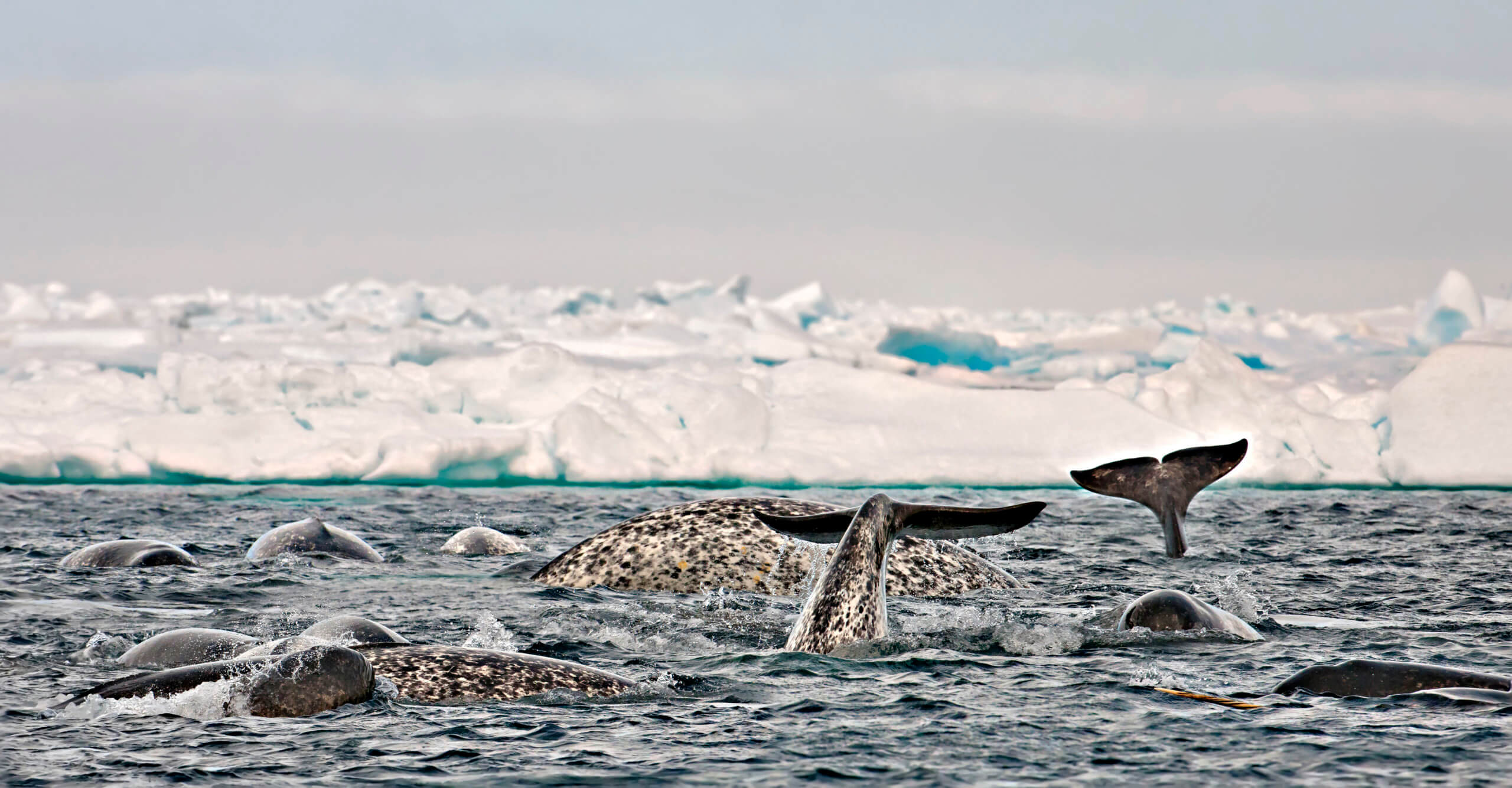
Photo by Michelle Valberg
Did you know that 75% of the world’s population of narwhals live in Canada? These elusive whales are known as the Unicorns of the Sea because of their single long tooth that extends out like a horn. Seeing them up close in the wild is possible, but you have to go north — all the way to Nunavut where the Arctic ocean meets the Canadian Arctic archipelago.
In the spring, narwhals can be found in Nunavut by taking an adventure out to the floe edge (the place where the open waters of the Arctic meet the ice attached to the land, also known as Sinaaq in Inuktitut). The floe edge in Lancaster Sound is a magnet for marine life and visitors can see pods of narwhals, as well as belugas and the beautiful bowhead whale (also walruses and polar bears, which are obviously not whales, but super cool creatures to spot in the wild). Later in the summer and into the fall, all these whales can be spotted from shore in places such as Lancaster Sound, Pond Inlet, Arctic Bay and Naujaat.
Responsible Whale Watching in Canada
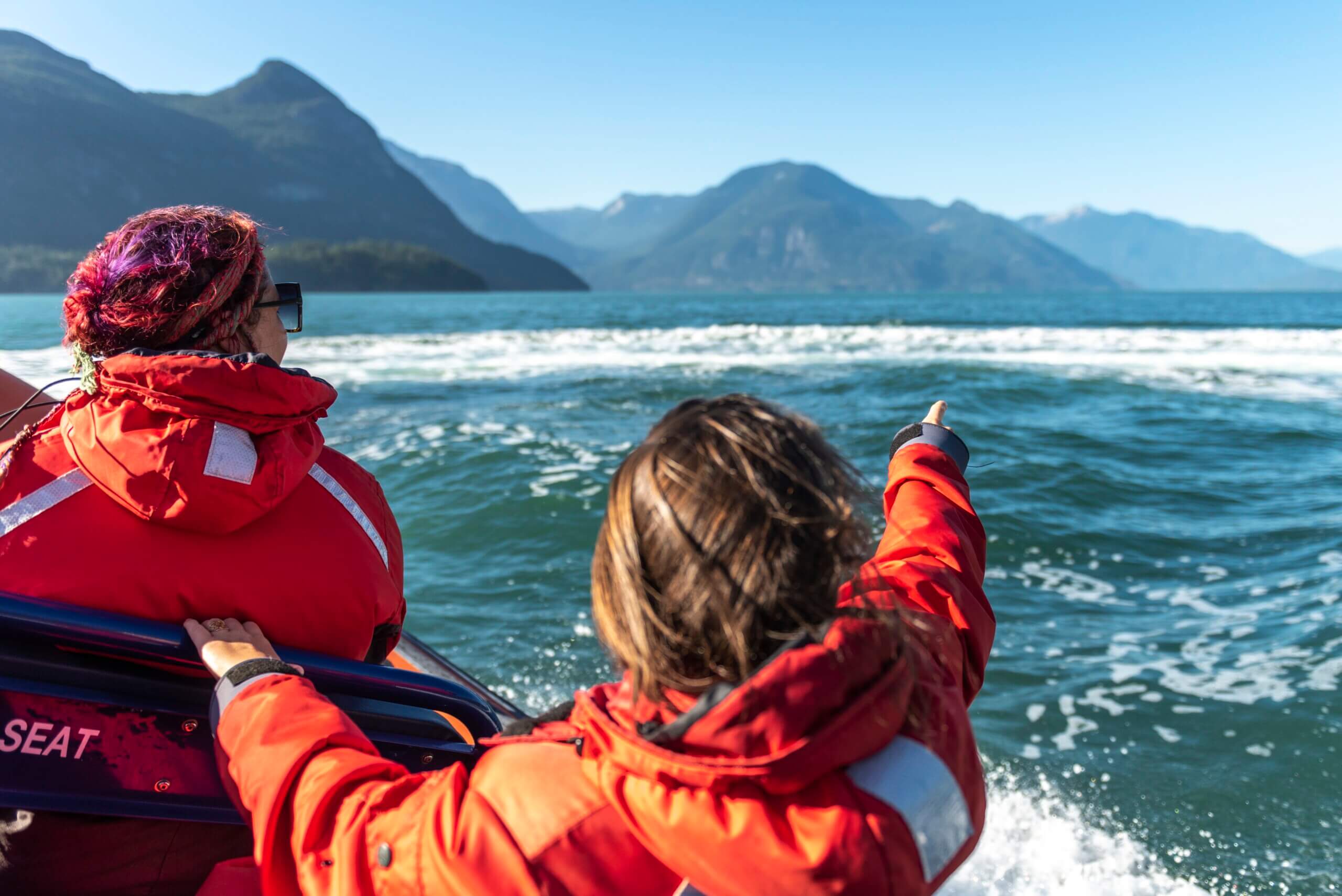
Photo c/o Destination Vancouver/Kate Milford
As with all things that are wildly popular, whale watching in Canada had been putting unnecessary stress on already dwindling marine life populations. Recently, Canada enacted new regulations to help protect the diversity of marine life in our oceans, putting limits on how close boats can get to whales and banning actions that involve human-whale interaction. What does this mean for visitors who dream of spotting whales on one of Canada’s three coasts? Well, the good news is that there are still plenty of safe and responsible ways to have incredible whale encounters in Canada.
Here are three important tips to remember:
- Keep your expectations in check. Nature cannot be scripted so head out on these adventures with a sense of adventure. Even if you don’t get a chance to see a whale breeching close by, you’ll still be surrounded by the majestic beauty of the water and coastline.
- Look for operators certified through Fisheries and Oceans Canada or affiliated with programmes like Whale Heritage Sites or Oceanic Society standards.
- Canadian marine mammal regulations (updated 2018) require boats to maintain a minimum 100-metre distance from most whale species and greater distances for at-risk populations like Southern Resident orcas and St. Lawrence belugas.
- Binoculars (8× or 10× magnification) and a telephoto lens (200mm or longer) allow for quality sighting and photography without pressuring animals.
- Shore-based whale watching is a low-impact alternative available at many locations, including Cape Spear (NL), Signal Hill (NL), and the shores of the St. Lawrence near Tadoussac.
Although the best way to experience the sheer size and beauty of a whale is in the water (whether on a boat, a zodiac or more intimately in a sea kayak), you can also often see whales right from the shore in many places along Canada’s nearly 250,000 km of coastline.
What Whales Can You See in Canada?
Canada is home to both major whale categories — toothed whales and baleen whales. Common species by region include:
Toothed whales: orca (killer whale), beluga, narwhal, sperm whale, pilot whale
Baleen whales: humpback, blue whale, fin whale, minke, gray whale, North Atlantic right whale (endangered)
| Coast | Region | Species |
| Pacific | British Columbia | Orca, humpback, gray whale, minke, fin whale |
| Atlantic | NL, NS, NB, PEI | Humpback, fin, minke, blue, right whale, sperm |
| St. Lawrence | Québec | Beluga, blue, fin, minke, humpback |
| Arctic / Subarctic | Churchill, Nunavut | Beluga, narwhal, bowhead |
Frequently Asked Questions: Whale Watching in Canada
Where is the best place to go whale watching in Canada?
Newfoundland and Labrador is widely considered the top destination for species diversity, with up to 22 whale species documented in the surrounding waters. British Columbia is the top choice for orca watching, particularly in the Salish Sea. Tadoussac, Québec is one of the few places in the world to reliably see blue whales from a boat.
What is the best time of year for whale watching in Canada?
May to October covers most of Canada’s whale watching season. Peak periods vary by region: mid-July to mid-August in Newfoundland; March to October along BC’s coast; June to October in Québec’s St. Lawrence; and July to August in Churchill, Manitoba.
Can you see whales from shore in Canada?
Yes. Many of Canada’s best viewing spots require no boat at all. Signal Hill and Cape Spear in Newfoundland, the shores near Tadoussac in Québec, and the beaches of Churchill in Manitoba all offer reliable land-based sightings during peak season.
Is whale watching in Canada ethical?
It can be, when done responsibly. Canada’s marine mammal regulations set minimum approach distances and prohibit disruptive behaviour near whales. Choose operators who follow these rules, travel in small groups, and employ naturalist guides. Avoid any tour that advertises physical interaction with whales.
Where can you see narwhals in Canada?
Canada is home to roughly 75% of the world’s narwhal population, making it the top destination for anyone hoping to see them in the wild. For the best sightings, head to Nunavut, particularly the floe edge in Lancaster Sound during spring, and near Pond Inlet, Arctic Bay, and Naujaat later in summer.
Where can you swim with beluga whales in Canada?
Churchill, Manitoba remains one of the best places to observe beluga whales in Canada. Each summer, up to 3,000 belugas enter the Churchill River viewable by zodiac, kayak, or from shore. That said, Canada’s updated marine mammal regulations prohibit in-water experiences with belugas.
This article was originally published on January 19, 2022 and was updated on March 16, 2026.

Pingback: Things To Do On A Family Vacation In Newfoundland 2022] - Landsby