


5 Walkable Canadian Cities Worth Exploring


Whether you're planning a long weekend or extending a cross-country journey, the city you choose can shape your entire trip. These walkable Canadian cities make it easy to experience more in less time. Historic streets, neighbourhood cafés, museums, markets, and waterfronts are all within easy reach, so you can spend less time getting around and more time exploring.
From colourful Atlantic harbours to lively urban neighbourhoods, these five Canadian cities are perfect for travellers who prefer to experience a destination on foot.
1. Victoria, British Columbia

Victoria wears its history well. Once a Hudson's Bay Company trading post, the city grew into British Columbia's colonial capital, and many of its heritage buildings still shape the downtown streetscape today.
Begin at the Inner Harbour, where the Parliament Buildings and the Fairmont Empress overlook one of Canada's busiest working harbours. Next, wander through Market Square, a restored heritage courtyard that was once the city's commercial centre. Then continue to Canada's oldest Chinatown.
Tucked inside Chinatown is Fan Tan Alley, the narrowest commercial street in Canada. Once known for gambling halls and opium factories during the city's gold rush era, today it's home to independent boutiques, cafés, and artisan shops while preserving an important chapter of Chinese Canadian history.
Round out your day with a walk through Beacon Hill Park, where winding pathways lead to gardens, Garry oak meadows, and sweeping views of the Strait of Juan de Fuca. If you're planning to spend more time on Vancouver island, combine Victoria with coastal communities, wildlife encounters, and scenic drives.
Don't miss:
- Inner Harbour
- Government Street
- Beacon Hill Park
- Fisherman's Wharf
- Chinatown & Fan Tan Alley
- Dallas Road & the Breakwater
2. Montréal, Québec
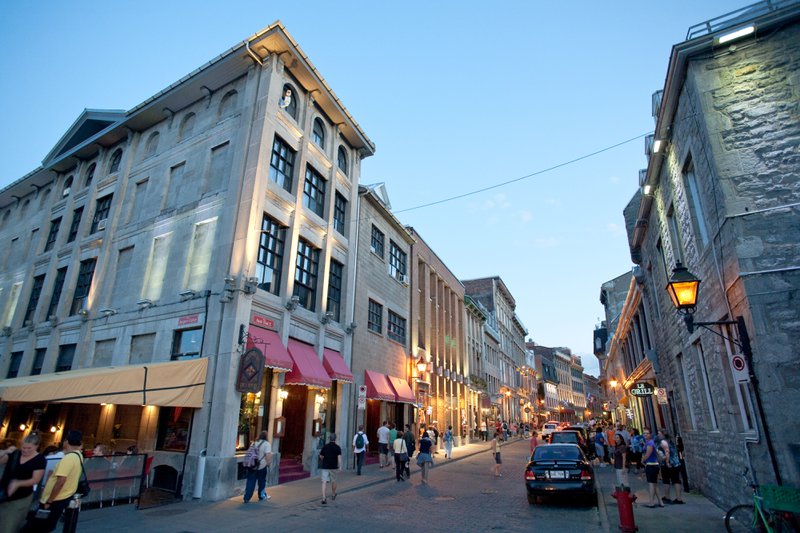
Founded in 1642, Montréal has spent centuries evolving into one of North America's most vibrant cultural capitals. Every neighbourhood tells a different chapter of that story, making it a fascinating city to explore on foot.
Start in Old Montréal, where cobblestone streets, centuries-old stone buildings, and the historic Old Port reflect the city's French colonial roots. From there, make your way into the Plateau-Mont-Royal, a neighbourhood shaped by generations of immigrants whose influence can still be seen in its restaurants, bakeries, cafés, bookstores, murals, and independent boutiques.
For a taste of local life, visit Jean-Talon Market, one of North America's largest public markets, where Québec produce, artisan cheeses, and multicultural food vendors reflect the diversity that has helped shape modern Montréal.
Finish with a walk through Mount Royal Park, designed by Frederick Law Olmsted, the same landscape architect behind New York City's Central Park. The park delivers stunning panoramic views of the city below.
See our array of itineraries that feature Montréal.
Don't miss:
- Old Montréal
- Plateau-Mont-Royal
- Mount Royal Park
- Saint-Paul Street
- Jean-Talon Market
3. Halifax, Nova Scotia
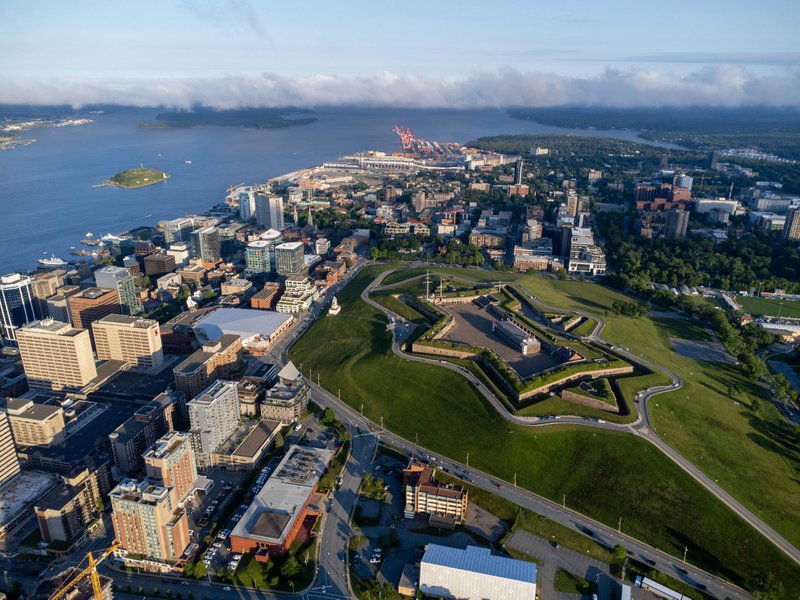
For more than 270 years, Halifax has welcomed sailors, merchants, immigrants, and travellers arriving on Canada's Atlantic coast. Its rich maritime history is woven into nearly every street, making it one of the country's most rewarding cities to walk.
The Halifax Waterfront Boardwalk stretches for several kilometres along one of the world's largest natural harbours, connecting museums, restaurants, breweries, artisan shops, and public art. Stop at the Maritime Museum of the Atlantic to learn about the city's deep connection to the sea before continuing to Historic Properties, one of Canada's oldest surviving warehouse districts.
Looking over it all is the Halifax Citadel, a star-shaped fort that has watched over the harbour since the 18th century. The climb is well worth it for both the history and the views.
Halifax is often the starting point for exploring the region, whether you're travelling the South Shore, Cape Breton, or embarking on a broader Atlantic Canada journey.
Don't miss:
- Halifax Waterfront Boardwalk
- Maritime Museum of the Atlantic
- Canadian Museum of Immigration at Pier 21
- Halifax Citadel National Historic Site
- Halifax Public Gardens
- Spring Garden Road
4. Toronto, Ontario

Toronto is easily one of the most walkable Canadian cities. It’s often celebrated for its skyline, but its real character is found at street level.
The city has been shaped by generations of newcomers, and each neighbourhood reflects a different chapter of its history. Spend the morning wandering through Kensington Market, where Victorian homes have been transformed into independent cafés, vintage shops, bakeries, and international restaurants by successive waves of immigrant communities.
Continue to St. Lawrence Market, which has served Torontonians since the early 1800s and remains one of Canada's great food markets. Later, explore the Distillery District, once the largest whisky distillery in the British Empire. Today, its beautifully restored Victorian industrial buildings house galleries, boutiques, restaurants, and theatres, blending history with contemporary culture.
Whether above ground or exploring sections of the PATH during cooler months, Toronto rewards travellers who take the time to explore neighbourhood by neighbourhood.
Don't miss:
- Kensington Market
- St. Lawrence Market
- Distillery District
- Harbourfront
- PATH (winter visits)
5. St. John's, Newfoundland & Labrador
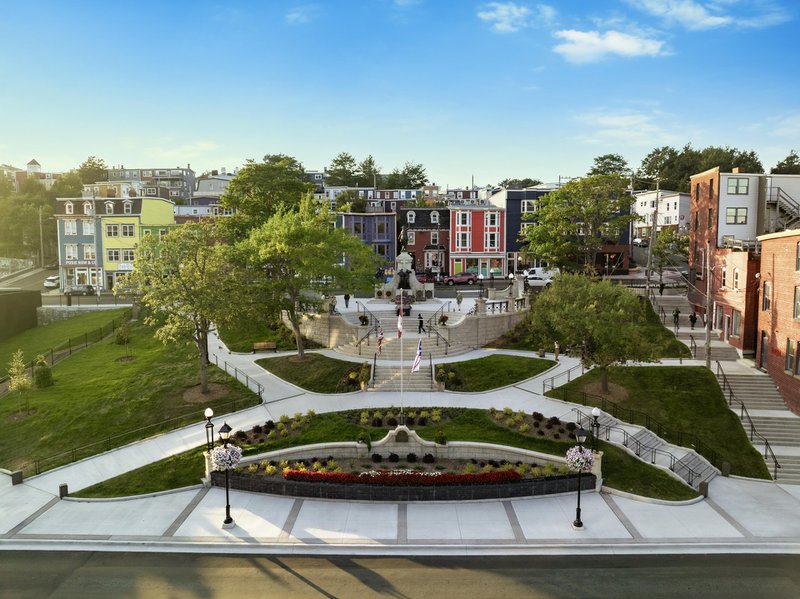
Few Canadian cities tell their story as vividly as St. John's. As one of North America's oldest European settlements, its colourful streets, rugged coastline, and centuries-old harbour have welcomed fishermen, explorers, and travellers for generations.
Begin on Water Street, believed to be one of the oldest commercial streets in North America, where local shops, restaurants, and galleries continue a tradition of commerce that stretches back hundreds of years. Climb through the colourful houses of Jellybean Row before making your way to Signal Hill National Historic Site.
It was here that soldiers once defended the harbour, and where Guglielmo Marconi received the world's first transatlantic wireless signal in 1901. Nearby, the picturesque fishing village of Quidi Vidi offers a glimpse into Newfoundland's enduring connection to the sea, with colourful stages, local artists, and one of Canada's most charming harbours.
St. John's is a city best explored slowly, where every hill reveals another view and every conversation feels like part of the experience.
Don't miss:
- Water Street
- Jellybean Row
- Signal Hill National Historic Site
- Quidi Vidi
- George Street
Bonus Stop: Vancouver, British Columbia
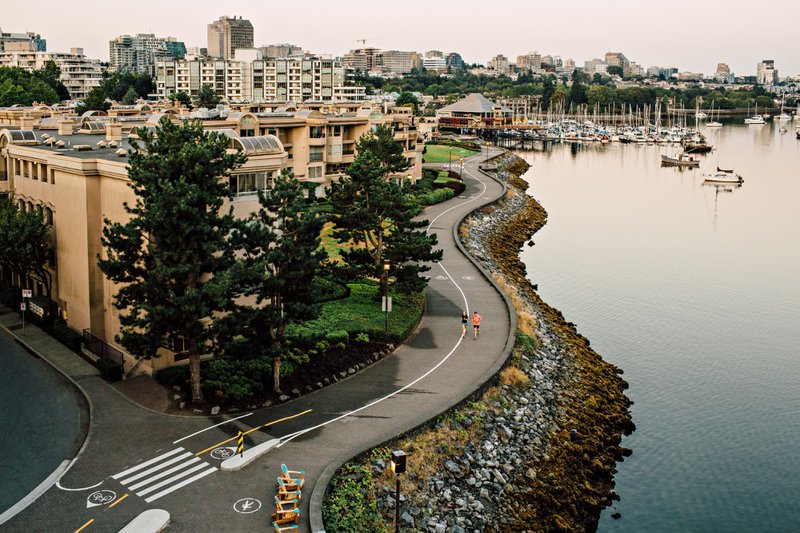
If you have time to add one more city to your itinerary, Vancouver offers one of Canada's most scenic urban walks.
The city's story begins with the forests and shores that have long been home to the Musqueam, Squamish, and Tsleil-Waututh Nations. Today, visitors can experience that connection to land and water along the Stanley Park Seawall, a nearly 10-kilometre waterfront path that circles one of the world's largest urban parks.
From there, wander through Gastown, Vancouver's oldest neighbourhood, where restored brick buildings, cobblestone streets, and the famous Steam Clock recall the city's earliest days as a bustling port. From there, continue into Yaletown, where former railway warehouses have been transformed into restaurants, cafés, and boutique shops, before finishing at Granville Island's lively public market.
Few cities combine nature, history, and urban life as seamlessly as Vancouver.
Don't miss:
- Stanley Park Seawall
- Gastown
- Steam Clock
- Yaletown
- Granville Island
Every Great Story Starts with a Walk
Walking changes the way we experience a destination and creates space to notice the details. From a neighbourhood bakery just opening for the morning, to a conversation with a local shop owner, or music drifting through an open doorway, and even a viewpoint you never would have found from behind the wheel.
Whether you're exploring a harbour city, a historic district, or a vibrant urban neighbourhood, these walkable Canadian cities remind us that sometimes the best way to discover a place is simply to slow down.
Because the best stories aren't always found in an itinerary. They're often waiting just around the next corner.