
Where the Wild Still Roams: Wildlife Experiences in Canada


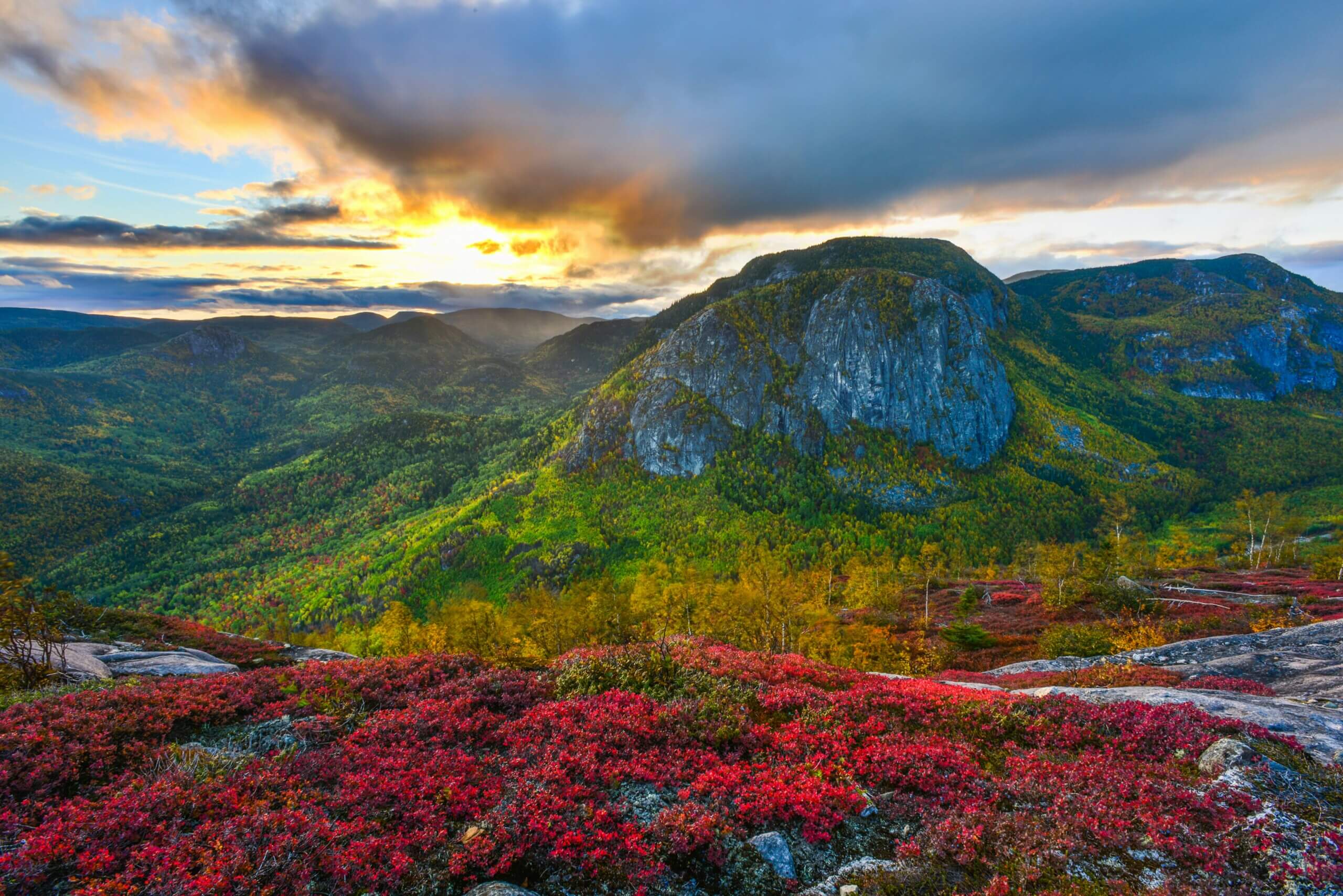
Canada is home to some of the world’s most memorable wildlife encounters. Across coastlines, rainforests, tundra, river valleys and protected parklands, travellers can witness animals moving through landscapes that still feel vast and uninhabited.
These experiences are never guaranteed, and that is sort of what makes them meaningful. Wildlife doesn’t operate on a schedule. Polar bears gather when the sea ice begins to take shape. Belugas arrive with the summer waters. Puffins return to nest on rocky islands. Salmon runs draw bears to riverbanks, and whales follow ancient feeding routes through coastal waters.
The best wildlife experiences in Canada combine seeing animals, with an understanding of the places that sustain them, the communities that help protect them, and the importance of observing with patience, humility, and respect.
1. Watch Polar Bears Gather Along Hudson Bay

Few wildlife experiences in Canada are as iconic as seeing polar bears near Churchill, Manitoba. Each fall, as Hudson Bay begins to freeze, polar bears gather along the coast while waiting for the sea ice to form. Once it does, they can return to the ice to hunt seals.
Mid-October to mid-November is considered prime polar bear viewing season in Churchill, when a number of bears may be seen in the region. The town is often called the Polar Bear Capital of the World, but the experience is more than a nickname. Nearby Wapusk National Park protects one of the world’s largest known polar bear maternity denning areas.
For travellers, the appeal lies in witnessing a powerful seasonal moment: bears resting, sparring, and moving across the tundra as the bay shifts toward winter.
Best time to go: Mid-October to mid-November
Where: Churchill, Manitoba
Why it’s special: One of the most accessible places in the world to view polar bears in the wild.
2. See Thousands of Beluga Whales in Churchill
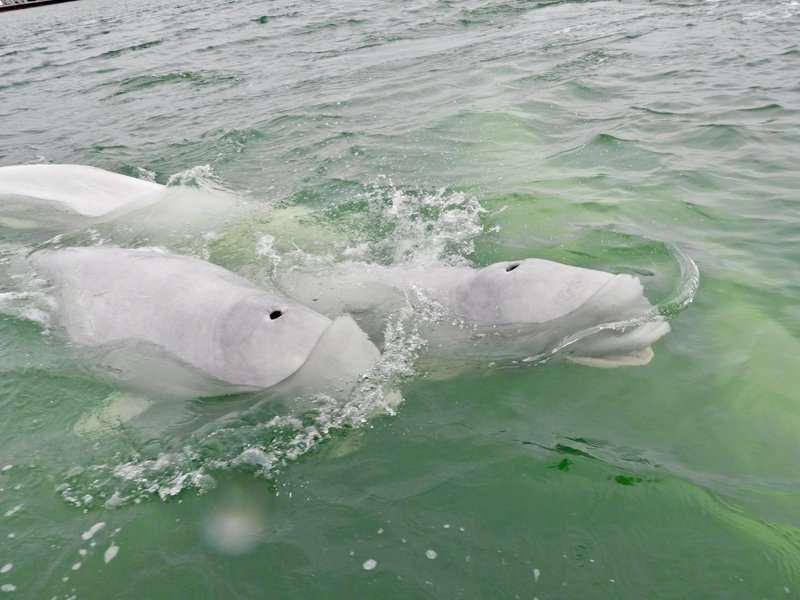
Churchill is known for polar bears in the fall, but summer brings a very different wildlife experience. Each year, thousands of beluga whales make their way into Hudson Bay, with roughly 4,000 entering the Churchill River Estuary.
Known for their high-pitched vocalizations, belugas are often called “sea canaries.” Travellers may experience them by boat, kayak, or other guided excursions, depending on conditions and operator offerings.
What makes this experience so memorable is not only the number of whales, but the setting. In the short northern summer, the estuary is a gathering place where belugas come to feed, mate and give birth, offering travellers a rare chance to witness one of the world’s most remarkable marine wildlife moments.
Best time to go: July and August
Where: Churchill River Estuary, Manitoba
Why it’s special: A summer wildlife experience that offers a completely different side of Churchill.
3. Search for Spirit Bears in the Great Bear Rainforest
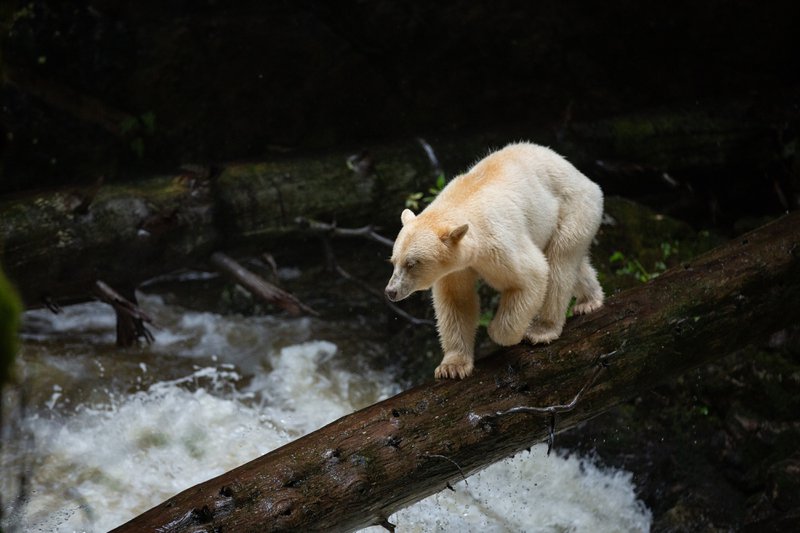
On British Columbia’s central and northern coast, the Great Bear Rainforest is a place of ancient forests, salmon rivers, marine life, and coastal bears. Among its most remarkable residents is the spirit bear, also known as the Kermode bear or moksgm’ol.
Spirit bears are not a separate species. They are black bears with a rare cream-coloured coat caused by a recessive genetic trait. Their presence is closely tied to the coastal rainforest and to the stewardship of local Indigenous communities, including the Kitasoo Xai’xais.
Seeing a spirit bear requires patience, respect, and time in the landscape. Travellers may spend days travelling by boat, walking through rainforest, and waiting quietly near salmon streams. Any sighting is a privilege, not a promise, which is part of what makes the experience so special.
Best time to go: Late summer into fall, depending on salmon activity and operator schedules
Where: Great Bear Rainforest, British Columbia
Why it’s special: A rare bear encounter rooted in rainforest ecology and Indigenous-led stewardship.
4. Watch Grizzlies During the Salmon Run in Bella Coola
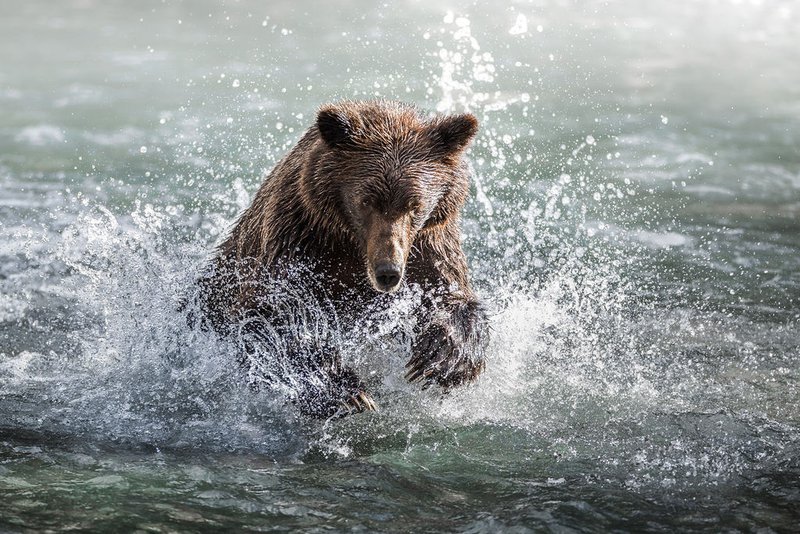
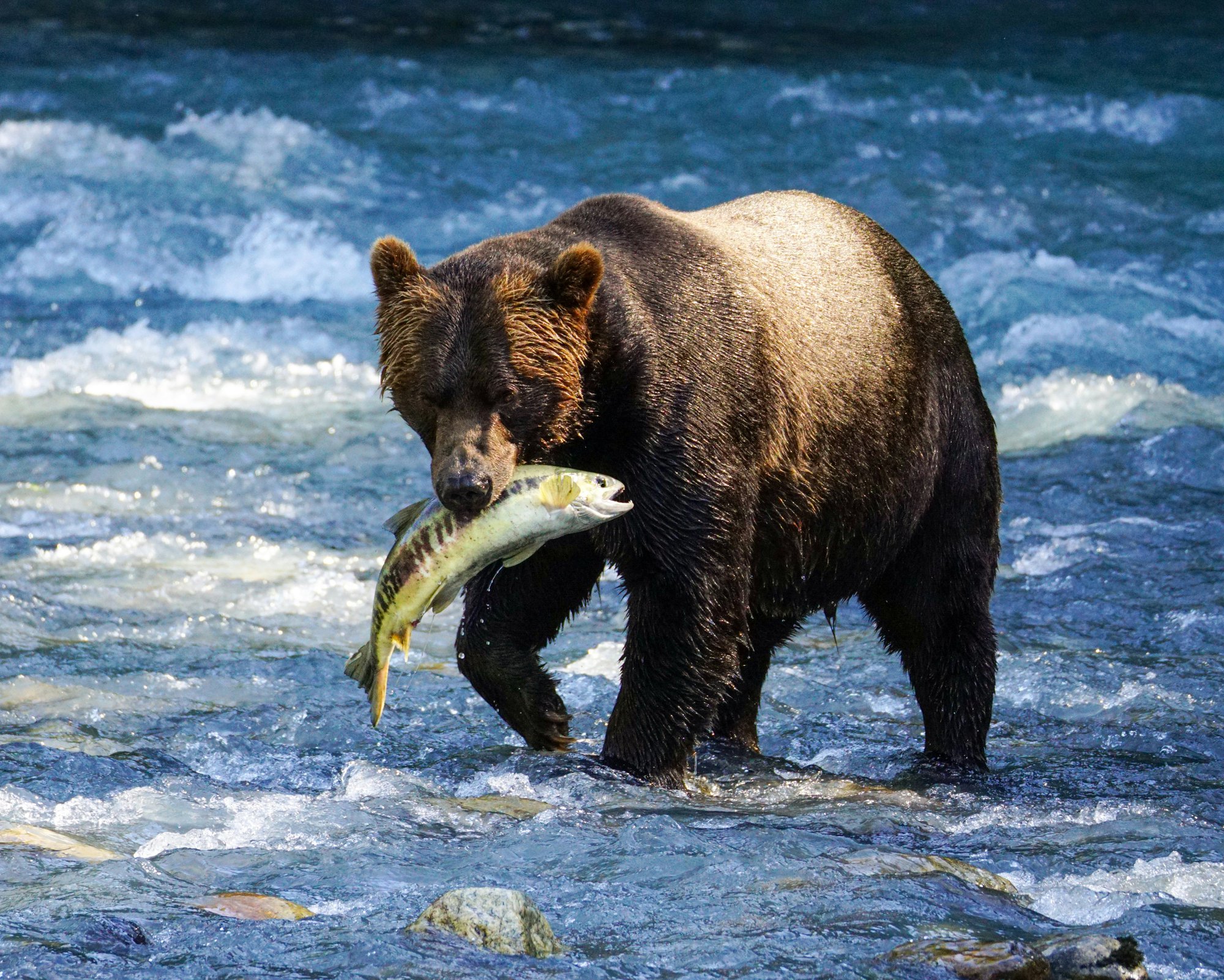
In British Columbia’s Bella Coola Valley and Tweedsmuir Provincial Park, grizzly bear viewing is closely tied to the salmon run. BC Parks notes that grizzlies gather along the Dean, Atnarko, and Bella Coola Rivers between May and October when salmon are in the water.
One of the most vivid wildlife experiences in Canada because it shows how closely an ecosystem is connected. Salmon return from the ocean to spawn. Bears gather along the riverbanks to feed. Eagles, forests, rivers, and coastal mountains are all part of the same story.
For travellers, the experience is as much about the landscape as the wildlife itself. Watching a grizzly move along a river in search of salmon reminds us that these encounters are shaped by timing, habitat, and the rhythms of the natural world.
Best time to go: Late summer into fall is often associated with salmon-run viewing, though BC Parks notes bear activity along the rivers between May and October
Where: Bella Coola Valley and Tweedsmuir Provincial Park, British Columbia
Why it’s special: A chance to witness the seasonal relationship between salmon, grizzlies and the rivers of coastal British Columbia.
5. Look for Orcas Along the Pacific Coast
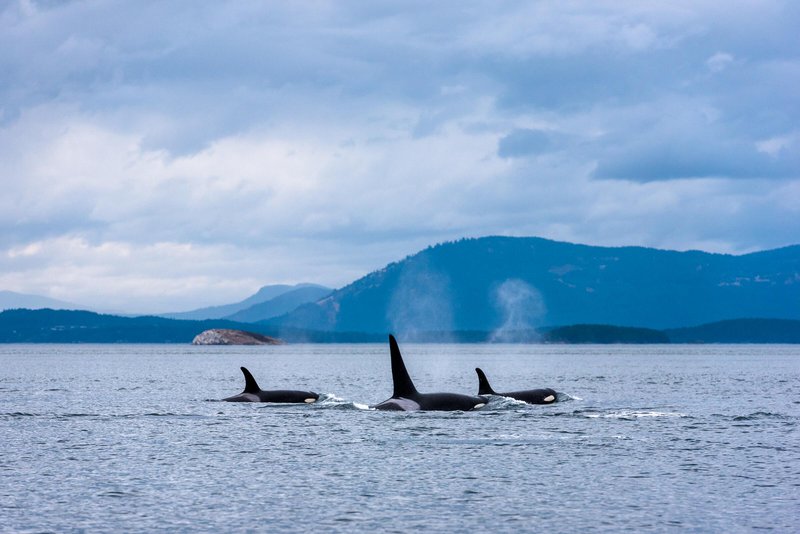
Along British Columbia’s Pacific coast, orcas move through a landscape of forested islands, sheltered channels, and deep coastal waters. For travellers, the experience is often as much about the setting as the sighting: mist rising from the shoreline, seabirds overhead, and the sudden appearance of a dorsal fin cutting through the water.
These waters are home to different types of killer whales, including resident, Bigg’s, and offshore orcas. Fisheries and Oceans Canada notes that these ecotypes differ in diet, behaviour, social structure, and vocalizations.
As with all wildlife, responsible viewing is essential. Southern Resident killer whales are endangered, and federal protection measures require vessels to keep significant distance from them in southern British Columbia coastal waters.
Best time to go: Varies by region and whale population
Where: Vancouver Island, the Salish Sea, Johnstone Strait and coastal British Columbia
Why it’s special: A chance to experience wild orcas within one of Canada’s most dramatic coastal landscapes.
6. Stand Among Atlantic Puffins in Newfoundland and Labrador
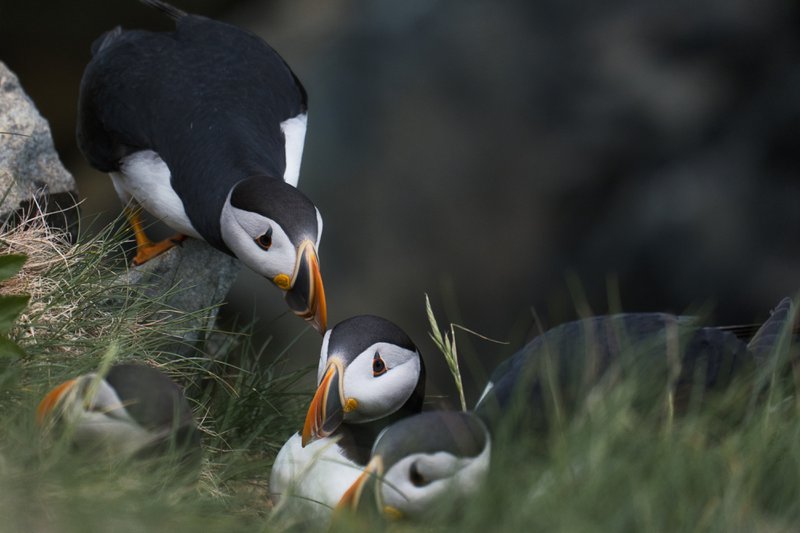
For bird lovers, few places in Canada are as joyful as Newfoundland and Labrador in puffin season. The Witless Bay Ecological Reserve contains North America’s largest Atlantic puffin colony, with more than 260,000 pairs nesting there during late spring and summer. The reserve also hosts more than 620,000 pairs of Leach’s storm-petrels, making it a significant seabird habitat.
Puffins may be small and colourful, but their lives are shaped by endurance: long ocean migrations, nesting in burrows, steep cliffs, and protected islands where human access must be carefully managed.
Seeing them in Newfoundland is a memorable wildlife experience not only because of the birds themselves, but because of what surrounds them. Few things are as magical as standing on the edge of the Atlantic, where sea cliffs, open water, and seabirds fill the horizon.
Best time to go: Late spring and summer
Where: Witless Bay Ecological Reserve, Newfoundland and Labrador
Why it’s special: North America’s largest Atlantic puffin colony, set against Newfoundland’s rugged coastal scenery.
7. Observe St. Lawrence Belugas in Québec
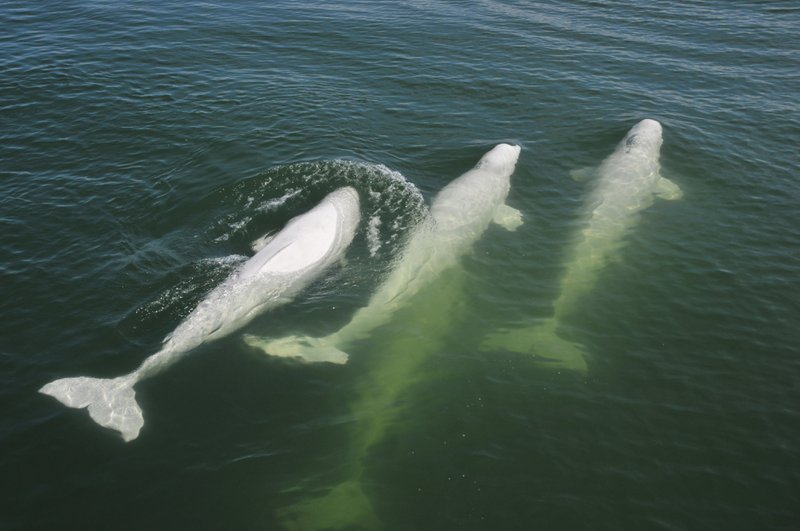
Where the Saguenay Fjord meets the St. Lawrence River, cold, nutrient-rich waters create a remarkable whale-watching region. In and around the Saguenay–St. Lawrence Marine Park, travellers may see species such as minke, fin, humpback, and blue whales, along with seals, seabirds, and the endangered St. Lawrence Estuary beluga.
Tadoussac is one of the best-known gateways to the region, with opportunities to experience the marine park by boat, zodiac, kayak, or from designated shore-based viewing areas. Parks Canada also highlights several exceptional places to watch whales from land, offering a slower and more respectful way to experience the river.
The St. Lawrence is not open ocean, yet it feels immense. Forested cliffs, salt air, seabirds, and the possibility of a whale surfacing in the distance all come together in a landscape shaped by water, wildlife, and history.
Best time to go: May to October
Where: Tadoussac and the Saguenay–St. Lawrence region, Québec
Why it’s special: A chance to see whales in one of Canada’s most iconic marine landscapes, with both boat-based and shore-based viewing options.
8. See Wood Bison in Wood Buffalo National Park
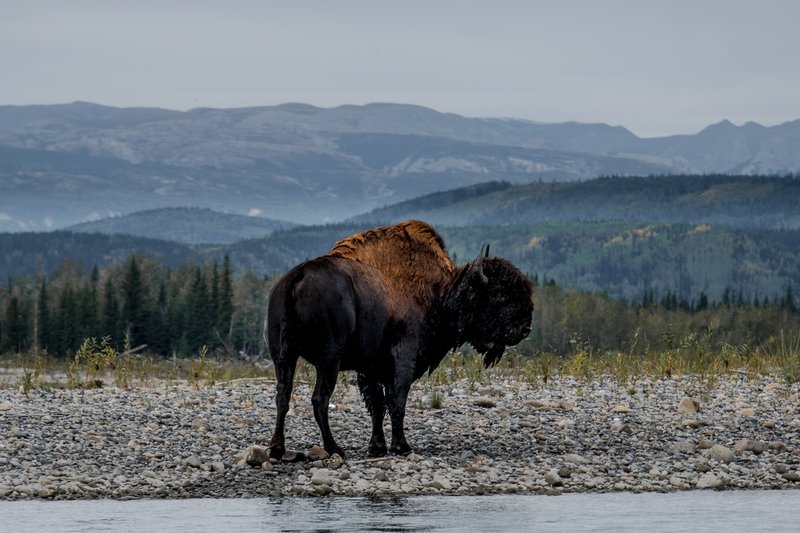
In Wood Buffalo National Park, wildlife viewing often begins from the road. Travellers may spot wood bison grazing near open meadows, moving slowly through boreal forest or standing along quiet stretches of highway in one of Canada’s most remote national parks.
The park was created in 1922 to protect the free-roaming bison herds of the region, and it remains one of the most important places in the world for wood bison conservation. Today, Parks Canada says Wood Buffalo National Park is home to around 3,000 wood bison, the largest free-roaming, self-regulating wood bison herd left in the world.
What makes this one of the best wildlife experiences in Canada is the scale of Wood Buffalo National Park which stretches across northern Alberta and the Northwest Territories. Here wetlands, boreal forest, salt plains, and wide northern skies create a landscape that feels far removed from the everyday.
Best time to go: Summer and early fall
Where: Wood Buffalo National Park, Alberta and Northwest Territories
Why it’s special: A chance to see free-roaming wood bison in one of Canada’s largest and most remote protected landscapes.
9. Visit the Narcisse Snake Dens in Manitoba
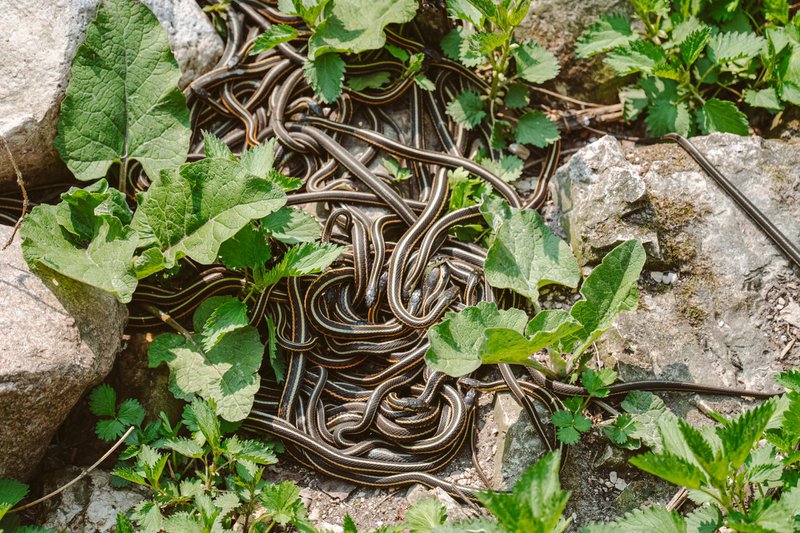
Each spring, the Narcisse Snake Dens in Manitoba become the site of one of Canada’s most unusual wildlife spectacles. As the weather warms, thousands of red-sided garter snakes emerge from their winter dens and gather for a short mating season that usually lasts one to three weeks in late April or early May.
Four active snake dens are connected by a self-guided interpretive trail, with viewing areas that allow visitors to observe the snakes without disturbing the dens.
It is a very different kind of wildlife encounter from watching bears, whales or seabirds, but that is what makes it memorable. The Narcisse Snake Dens offer a rare look at a natural phenomenon that’s easy to overlook until you are standing there, watching the ground come alive with movement.
Best time to go: Late April to early May, depending on weather
Where: Narcisse, Manitoba
Why it’s special: A short, seasonal wildlife phenomenon and one of Canada’s most unexpected natural gatherings.
10. Haida Gwaii’s Unique Black Bears
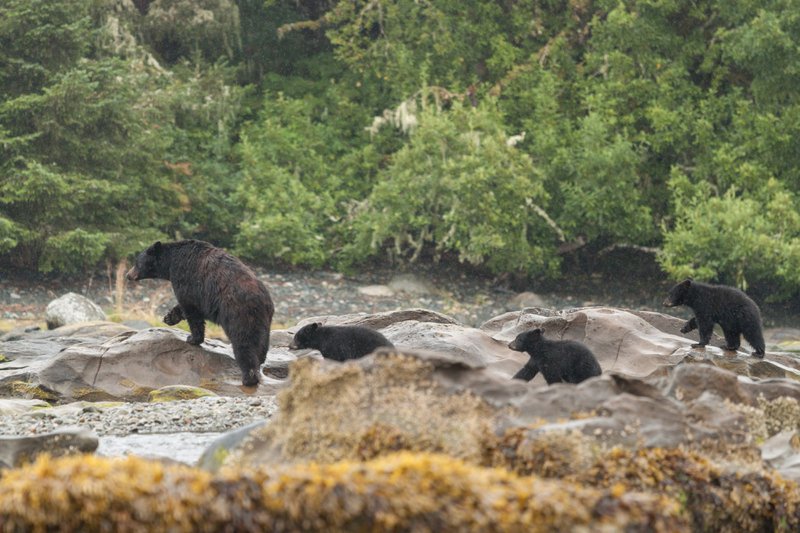
In Haida Gwaii, black bears are part of the rhythm of island life. They move between forest, stream, and shoreline, feeding on salmon when the creeks are running and foraging in the intertidal zone at low tide.
The bears found here are distinct from their mainland relatives. Parks Canada notes that the Haida Gwaii black bear is the only bear species on the archipelago today. A long-term diet of salmon and hard-shelled creatures has contributed to larger jaws and teeth than mainland black bears.
Haida Gwaii is a place where forest and ocean constantly meet, and the bears reflect that connection. In autumn, they are often seen near streams during the salmon run and may also be found foraging along the shore.
Best time to go: Autumn is often associated with salmon activity. Access and sightings depend on local conditions and guide availability
Where: Haida Gwaii, British Columbia
Why it’s special: A chance to learn about a distinct island black bear population shaped by salmon, shoreline and the ecology of Haida Gwaii.
How to Experience Wildlife Responsibly
The most meaningful wildlife experiences in Canada happen when animals are allowed to remain wild. That means travelling with experienced guides, following local regulations, keeping a safe distance, and accepting that sightings are never guaranteed.
Visitors are encouraged to learn how to observe wildlife safely, respect distance requirements, and never feed wild animals. Feeding wildlife is illegal in national parks and can put both animals and people at risk.
For marine mammals, Canada has specific approach distances, including greater protections for endangered or threatened species. Vessels must keep 400 metres away from whales, dolphins, and porpoises listed as endangered or threatened under the Species at Risk Act.
Responsible wildlife travel is not about getting as close as you can. When travellers understand the landscapes, seasons, and conservation stories behind each encounter, wildlife viewing becomes a way to better understand the species that call Canada home.
For more information on responsible wildlife experiences in Canada, read:
Ethical Wildlife Viewing: How to Watch Wildlife in Canada Without Doing Harm