

When to Visit the Yukon: A Month-by-Month Breakdown

In the Yukon, “best time to visit” really means “what do you want to feel?” Midnight sun or deep winter silence, roaring rivers or frozen lakes? Each month delivers a different mood rather than simply a season. This guide breaks the year down month by month so you can match your trip to the experiences you care about most.

Quick month-by-month snapshot
- January–March: Deep winter, aurora, snow-based culture and tours.
- April–May: Break-up and shoulder season, interesting for wildlife and photography but limited logistics.
- June–August: Summer access, midnight sun, rivers, highways, and prime hiking and paddling.
- September–October: Fall colours, aurora’s return, then freeze-up and closing logistics.
- November–December: Dark season into early winter tourism, with strong northern lights potential.
Use the snapshot to narrow your timing, then dive into the month that matches your priorities.
Winter: January–March

January
January is full winter. Light is limited, temperatures are low, and the nights are long enough for reliable aurora viewing. Most experiences cluster around hubs like Whitehorse and Dawson City, with dog sledding, snowshoeing, snowmobiling, and winter festivals forming the backbone of winter trips. Roads are open, but rural travel assumes solid winter driving skills, and wildlife viewing is minimal outside of urban ungulates and a few specific winter ranges.
Best if you want: Intense winter, peak darkness for aurora, and cozy, hub‑based adventures.
February
February remains deep winter but with a bit more daylight than January. Aurora viewing stays strong thanks to long nights and often clear skies, while cultural events and guided experiences like dog sledding, snowmobiling, and ice-based activities run steadily. Backcountry access generally requires guides and proper gear, so most visitors stick to road‑based itineraries between Whitehorse, Dawson, and nearby day‑trip areas.
Best if you want: Northern lights plus active winter festivals, with slightly more usable daytime than January.
March
March is a transitional winter month where you still get deep snow but much more daylight. Conditions remain good for skiing, snowmobiling, dog sledding, and other snow-based tours, while longer days make road trips and day excursions easier to manage. Aurora season continues, but photography shifts as the balance between darkness and daylight changes, making March a balanced month for winter travellers.
Best if you want: Winter activities without the extreme darkness of mid‑winter, plus strong aurora potential.
Shoulder seasons: April–May and October

April
April is the start of break‑up, when river ice fractures and snowmelt pushes water levels around the territory. It’s still a good time for end-of-season winter activities but makes for a more observational Yukon experience. Migratory birds return in big numbers, early wildflowers start to show, and bears begin to emerge from their dens along south‑facing slopes. For photographers and wildlife‑focused travellers who do not mind some mud, meltwater, and the potential for closed logistics, April is a rewarding time to watch the territory shift seasons in real time.
Best if you want: Niche wildlife and break‑up photography rather than classic touring or paddling.
May
May sits between break‑up and early summer. Daylight is long, wildlife activity increases, and road access improves, but alpine hiking and serious river expeditions are still limited. Campgrounds and territorial parks begin phased openings, and lower‑elevation fishing conditions improve as lakes and rivers clear of ice. It’s a good shoulder season for travellers who prefer fewer people and don’t mind missing some of the marquee summer experiences.
Best if you want: Quieter roads, early‑season wildlife, and long days without full summer crowds.
October
October is a freeze‑up month. Temperatures drop, snow returns at elevation, and lakes and rivers begin to refreeze, shutting down ferries and floatplane operations until winter routes or ice roads are viable. Trails become inconsistent due to freeze‑thaw cycles, with mud, ice, and early snow all possible on the same route. Aurora viewing is strong thanks to long nights, but the overall travel experience feels fragmented as summer logistics have closed and full winter operations are not yet running.
Best if you want: Strong aurora and moody shoulder‑season landscapes, not comprehensive access.
Summer access: June–September

June
June marks the effective start of the summer travel window. Territorial parks open up, rivers become navigable, roads are clear, and outfitters start running full operations. Daylight reaches its maximum, with up to roughly 18–22 hours of usable light depending on latitude, giving that classic midnight‑sun feel. Wildlife is active, migratory birds pass through the Tintina Trench, and bear viewing is strong along river corridors and roadside vegetation, while lower‑elevation hikes are accessible and alpine routes become more feasible later in the month.
Best if you want: Maximum daylight, green landscapes, and a full slate of guided summer activities.
July
July is peak summer access. The Dempster Highway is generally feasible for well‑prepared drivers, Kluane flightseeing is typically reliable, and alpine hiking becomes widely viable as snowpack recedes. Salmon runs begin on different river systems, bumping up bear and eagle activity, while river expeditions on the Yukon River and more remote fly‑in routes run steadily. For many visitors, this is the most consistent month for broad access across regions and activities.
Best if you want: The “do everything” month—road trips, hiking, paddling, wildlife, and long, bright evenings.
August
August maintains July‑level access with strong wildlife visibility (bears, salmon, sheep) and stable river conditions across much of the territory. Alpine areas remain fully open until late in the month, when early snow can appear at high elevations, while darkness finally returns at night so the aurora can begin to reappear toward the end of August. This overlap of full summer access plus potential northern lights is unusual and often overlooked by first‑time visitors.
Best if you want: A rare combination of summer adventures by day and a chance of aurora late at night.
September
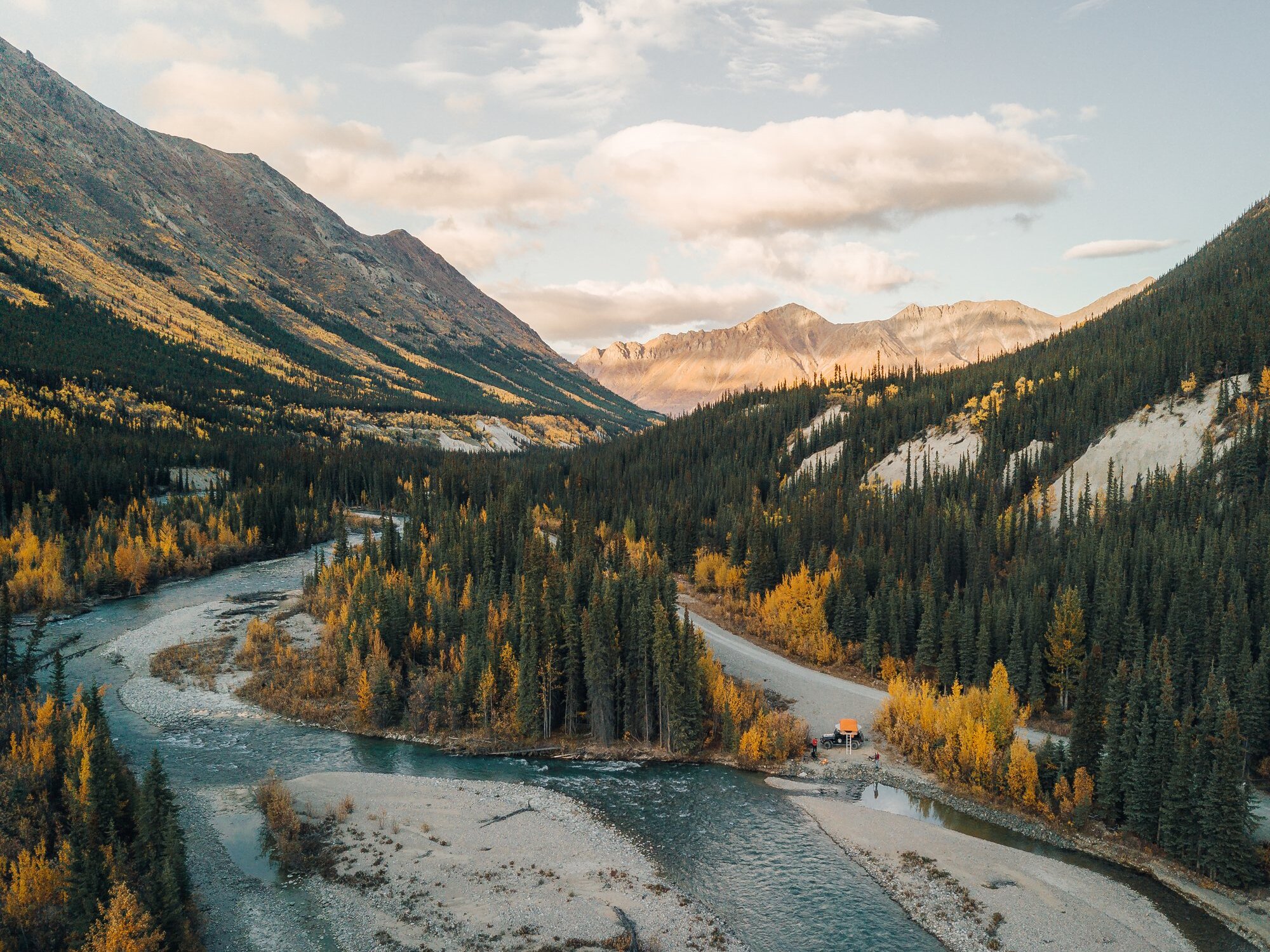
September delivers a short but distinctive fall season. Tundra and alpine valleys turn red and gold, creating one of the most striking landscape photography windows of the year. Access remains high early in the month, but snow can arrive at elevation without warning, and some seasonal operations begin to wind down by late September. Wildlife remains active as bears feed before denning and sheep move into more accessible ranges, while aurora viewing strengthens with longer, darker nights.
Best if you want: Fall colours, active wildlife, and good chances of northern lights while keeping many summer options.
Dark season and early winter: November–December

November
November is deep dark season without full winter infrastructure in place. Nights are long enough for strong aurora viewing, but many winter tourism products are still ramping up and not yet running at peak capacity. Road travel shifts fully to winter conditions, cultural activities move indoors, and wildlife visibility drops outside of specific winter ranges.
Best if you want: Dark‑sky and aurora photography and don’t mind limited activity choice.
December
December marks the beginning of the structured winter tourism season. Aurora packages, winter cultural experiences, dog sledding, and snow‑based recreation return to centre stage, especially around Whitehorse and Dawson. Nights are very long, temperatures are cold, and daylight is minimal, with travel primarily road‑based between communities and no summer river or alpine options. Outside of holiday periods, December often feels quieter than peak winter months.
Best if you want: Early winter vibes with operating tours and festive atmosphere rather than maximum cold.
Key takeaways: Matching month to experience
| If you’re looking for: | You might prefer these months: | Look forward to: |
|---|---|---|
| Midnight sun & maximum access | June–August | Long days, open parks and highways, active guides and outfitters, peak hiking and paddling. |
| Fall colours & wildlife | Early–mid September | Dramatic tundra colour, bears feeding up, accessible hikes, and usable daylight. |
| Aurora & winter culture | January–March | Long dark nights, established winter products, and strong aurora statistics. |
| Quiet shoulder-season exploration | May, late September, October | Fewer visitors and moody landscapes, but reduced logistics and some closures. |
A good Yukon trip aligns with the experiences you care about, not just the temperature you prefer. For most travellers seeking maximum access, June through September is the most reliable window, while January through March is often the sweet spot for aurora and winter culture with solid on-the-ground support.